 Pin It
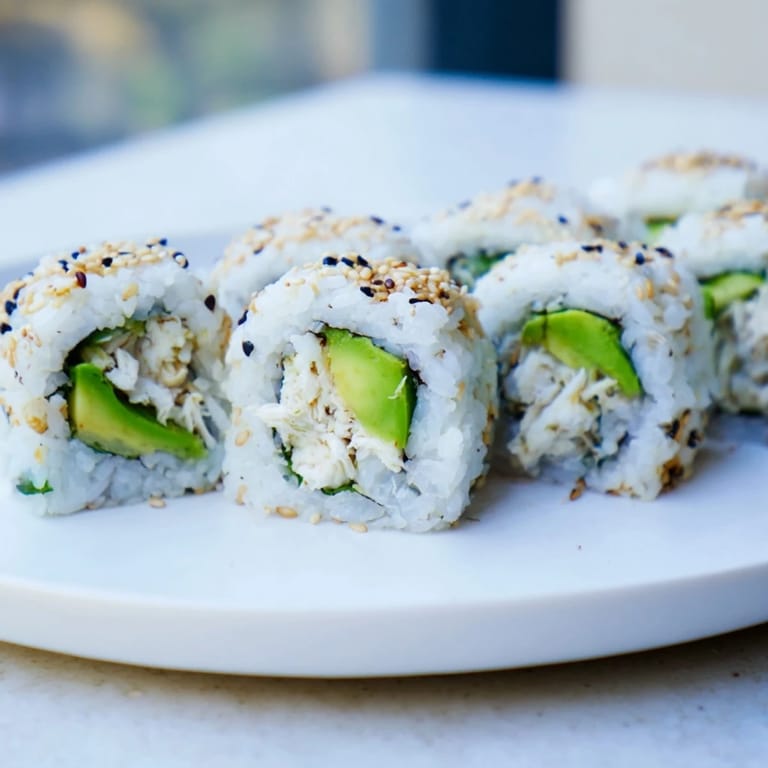
 There's something almost meditative about rolling California rolls in my kitchen on a Saturday afternoon. I discovered them years ago at a casual sushi spot, completely charmed by how the creamy avocado played against the crisp cucumber and tender crab. What struck me most wasn't just the flavors—it was realizing I could recreate that exact moment at home, using my hands and a simple bamboo mat. Once I figured out the technique, I became that friend who showed up to gatherings with homemade sushi rolls, and honestly, people were impressed in a way that made the effort feel worthwhile.
I remember making these for my sister's surprise birthday party, and she walked into my kitchen mid-roll, flour somehow on my shirt and rice vinegar smell hanging in the air. She laughed at the mess but tasted one of the finished rolls and got quietly emotional—not because they were restaurant-perfect, but because I'd spent the afternoon thinking about what would make her happy. That's when California rolls stopped being just a dish and became something tied to intention.
Ingredients
- Sushi rice (1 ½ cups): The foundation of everything; rinsing it removes starch so each grain stays distinct instead of turning gluey, and that makes rolling and eating so much more pleasant.
- Water (2 cups): Use filtered if you have it—tap water works fine, but the rice will taste noticeably sweeter and cleaner.
- Rice vinegar (2 ½ tbsp): This is where the signature sushi tang comes from; don't substitute regular vinegar or the whole thing tastes off.
- Sugar (1 tbsp): A touch of sweetness balances the vinegar and keeps the rice from tasting too sharp.
- Salt (¾ tsp): Use sea salt if you have it; it dissolves more smoothly into the warm rice.
- Crabmeat or imitation crab sticks (120 g): Surimi is honestly great here—it stays tender and has that delicate flavor that doesn't overpower the other ingredients, plus it's way easier on the budget.
- Avocado (1 ripe one): Ripeness matters; you want it soft enough to spread slightly but still holding its shape, so slice it just before assembly to prevent browning.
- Cucumber (½ one): Peel and seed it so the filling doesn't get watery; thin strips prevent the roll from falling apart.
- Mayonnaise (2 tbsp optional): A thin line adds richness that makes the roll feel more luxurious, but skip it if you prefer cleaner flavors.
- Nori sheets (4): Quality nori tastes briny and slightly sweet; cheap nori tastes like seaweed-flavored paper, so it's worth spending a couple dollars more.
- Toasted sesame seeds (2 tbsp): Toast them yourself if you can; they bloom when they're warm and add a nutty depth that pre-toasted seeds sometimes lack.
Tired of Takeout? 🥡
Get 10 meals you can make faster than delivery arrives. Seriously.
One email. No spam. Unsubscribe anytime.
Instructions
- Prepare the rice foundation:
- Rinse the sushi rice under cold running water, stirring gently with your fingers until the water runs completely clear—this takes patience but makes the rice less starchy and far more pleasant to eat. Combine with water in a saucepan, bring to a boil, cover, and simmer on low for 15 minutes, then remove from heat and let rest covered for 10 minutes so the grains finish absorbing the water and soften evenly.
- Season while warm:
- Mix rice vinegar, sugar, and salt together until the sugar and salt completely dissolve, then gently fold this into the warm rice using a wooden spoon or paddle, turning the rice to coat it evenly without crushing the grains. Let it cool to room temperature before you touch it; warm rice is too sticky to work with, but it shouldn't be cold either or the texture becomes stiff.
- Set up your rolling station:
- Place your bamboo sushi mat on a clean, dry surface and cover it with plastic wrap so the rice doesn't stick; this small step saves so much frustration. Place one nori sheet shiny side down on top of the plastic wrap, and you're ready to go.
- Spread the rice like you mean it:
- Wet your hands with a mixture of water and a tiny pinch of salt—this prevents rice from clinging to your fingers—then take about ¾ cup of rice and spread it evenly over the nori, leaving a 2 cm border at the top so you have something to seal with. Sprinkle toasted sesame seeds over the rice while you work, pressing them down gently.
- The flip that changes everything:
- Carefully lift the mat and flip the whole thing so the rice side faces down and the nori faces up; take your time here because this is where people usually panic, but it's honestly straightforward if you move deliberately. If you've covered your mat with plastic wrap like I suggested, this flip is nearly foolproof.
- Fill with intention:
- Arrange your crab or surimi, avocado, and cucumber in a thin, tight line along the bottom edge of the nori, keeping the portions modest so the roll doesn't get too thick to seal properly. Add a thin line of mayonnaise if you're using it, just a whisper so it doesn't make everything soggy.
- Roll with quiet confidence:
- Using the mat, start rolling away from you, pressing gently but firmly to shape the roll into something compact and cohesive, and when you reach the bare border of nori at the top, wet it with a little water to seal everything together. The roll should be snug enough that it holds its shape but not so tight that you're squeezing out the filling.
- Slice with a sharp, wet blade:
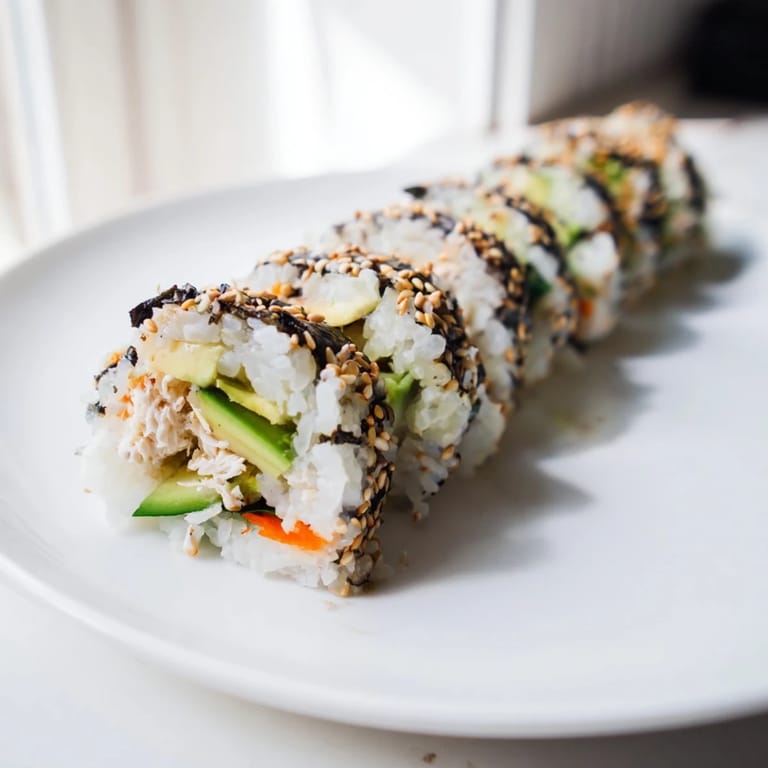
- Using a sharp knife dipped in water (and re-wetted between cuts), slice the roll into 6 pieces with one smooth motion rather than sawing back and forth; wet the blade again before each cut so nothing sticks. The pieces should look clean and intact, not mangled.
- Serve at room temperature:
- Arrange the rolls on a plate with soy sauce, pickled ginger, and wasabi on the side, and eat them within an hour or so when the rice is still at its best and the textures haven't shifted.
 Pin It
 My neighbor dropped by one evening while I was mid-roll, and instead of thinking I looked silly standing there with wet hands and a bamboo mat, she asked if she could help. We made rolls together for the next hour, laughing when her first attempt fell apart and celebrating when her second one came together perfectly. That night, sushi stopped feeling like something I made alone and became something I could share and teach, which somehow made it taste even better.
The Art of Rolling
Rolling sushi is less about being perfect and more about being intentional. The first time you do it, your hands will feel clumsy and you might think you're messing up, but even imperfect rolls taste wonderful because you made them with care. I've found that watching your hands work, feeling the resistance of the mat, and listening for the slight crackling of the nori is a kind of calm that makes the whole kitchen feel different. Once you've rolled three or four times, your hands remember what to do, and the anxiety disappears.
Variations Worth Trying
The California roll is endlessly adaptable once you understand the foundation. I've made vegetarian versions using extra avocado and roasted vegetables, spicy versions with sriracha mixed into the mayo, and even once added thin slices of cooked tempura shrimp that made it feel indulgent in a different way. The best version is always the one that speaks to what you have in your kitchen and what sounds good that day; the structure stays the same, but the personality changes entirely.
Pairing and Serving
California rolls sit at a beautiful intersection—casual enough for a quiet lunch but elegant enough for a dinner that makes people smile. I've served them alongside a crisp, dry white wine that cuts through the richness of the avocado and mayo, or with sake if I'm leaning into the Japanese tradition of it all. The pickled ginger provides a palate cleanser between bites, wasabi adds heat if you want it, and soy sauce ties everything together with saltiness and umami.
- Make the rolls an hour or two before eating; they're best when the rice is still slightly warm but the nori has softened just enough to be chewy.
- Store leftovers wrapped tightly in the refrigerator, though they taste noticeably better fresh and should be eaten within a day.
- If you're cooking for guests, make them in advance up to the point of slicing, cover them with plastic wrap, and slice just before serving so they look pristine and fresh.
 Pin It
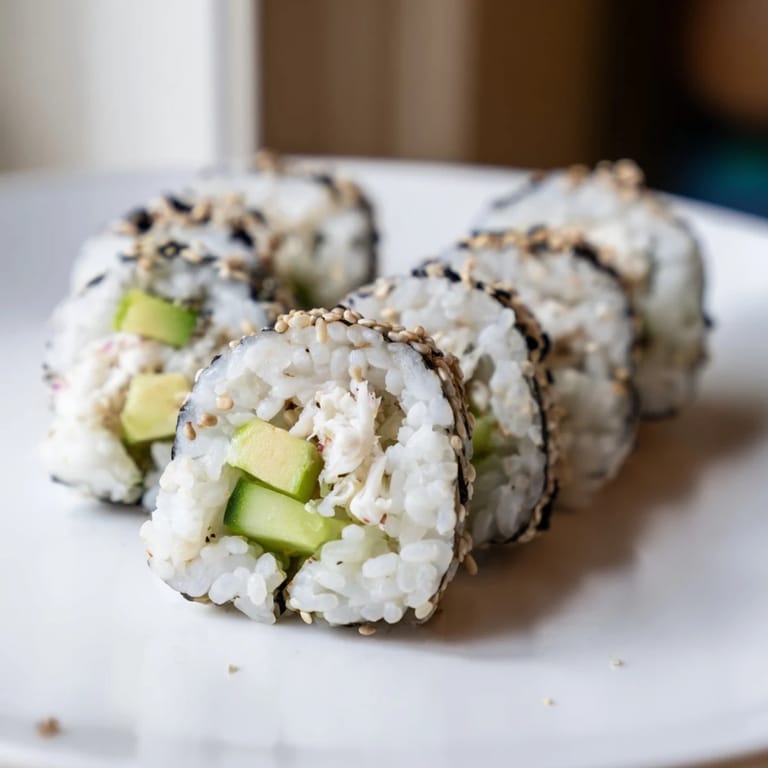
 Every time I make California rolls, I'm struck by how a few simple ingredients and a little patience can become something that brings people together. There's real magic in homemade sushi, and I hope you find it too.
Recipe FAQs
- → What type of crab can be used in the roll?
Both cooked crabmeat and imitation crab (surimi) work well, providing a tender, mildly sweet flavor.
- → How should the sushi rice be prepared?
Rinse the rice until water runs clear, cook with water, then season with a mixture of rice vinegar, sugar, and salt for authentic texture and taste.
- → Can I substitute ingredients for dietary preferences?
Yes, for vegetarian options, replace crab with extra avocado and cucumber or use tofu.
- → What tools are essential for rolling?
A bamboo sushi rolling mat, sharp knife, and plastic wrap are key to shaping and slicing neat rolls.
- → How can I enhance the flavor profile?
Adding a touch of sriracha to mayonnaise gives a pleasant spicy kick, balancing the creamy and fresh components.