 Pin It
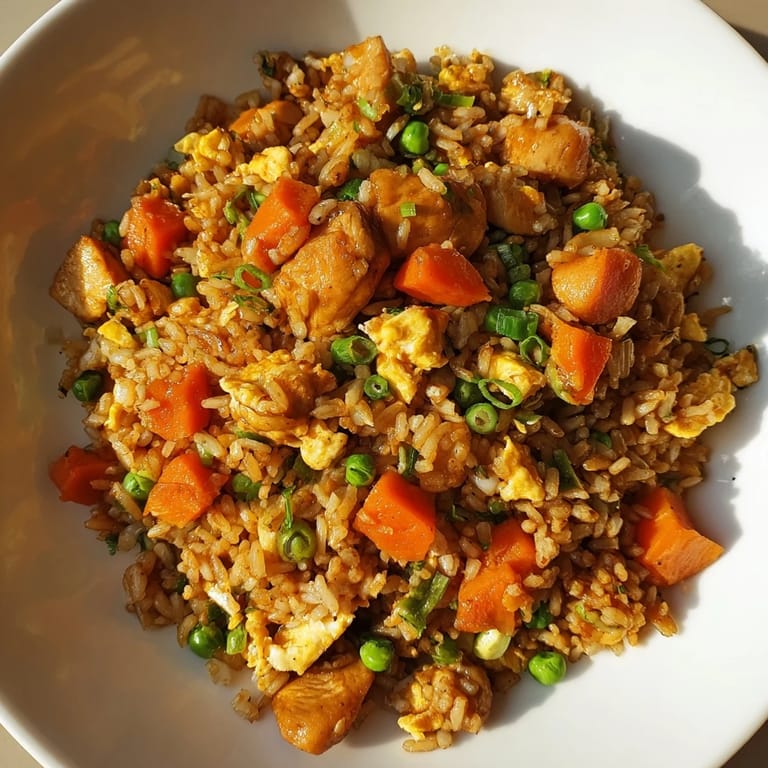
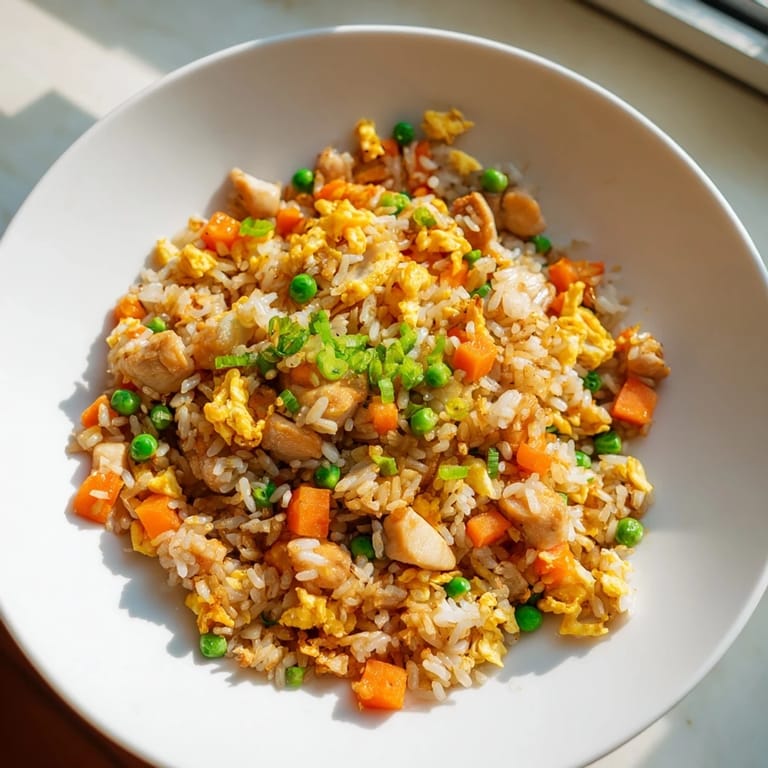
 There's something deeply satisfying about the sound of chicken hitting hot oil in a wok—that sharp sizzle that tells you everything is about to come together beautifully. I stumbled into making chicken fried rice during a lazy Friday when my fridge had odds and ends that needed rescuing: some leftover rice from takeout three days prior, a few eggs, and chicken I'd meant to cook earlier in the week. What started as a mission to avoid waste turned into one of those meals I now make intentionally, craving that perfect balance of tender chicken, fluffy eggs, and just enough sauce to make every grain sing.
I'll never forget cooking this for my roommate who was convinced she couldn't make stir-fry at home—something about the heat, the speed, the pressure of it all. Watching her face when she realized how forgiving the technique actually is, how the flavors came together in real time as she stirred, made me realize this dish is as much about quiet confidence in the kitchen as it is about technique.
Ingredients
- Chicken breast or thigh: Thigh meat stays juicier and more forgiving, but breast works beautifully if you don't overcook it past that golden stage.
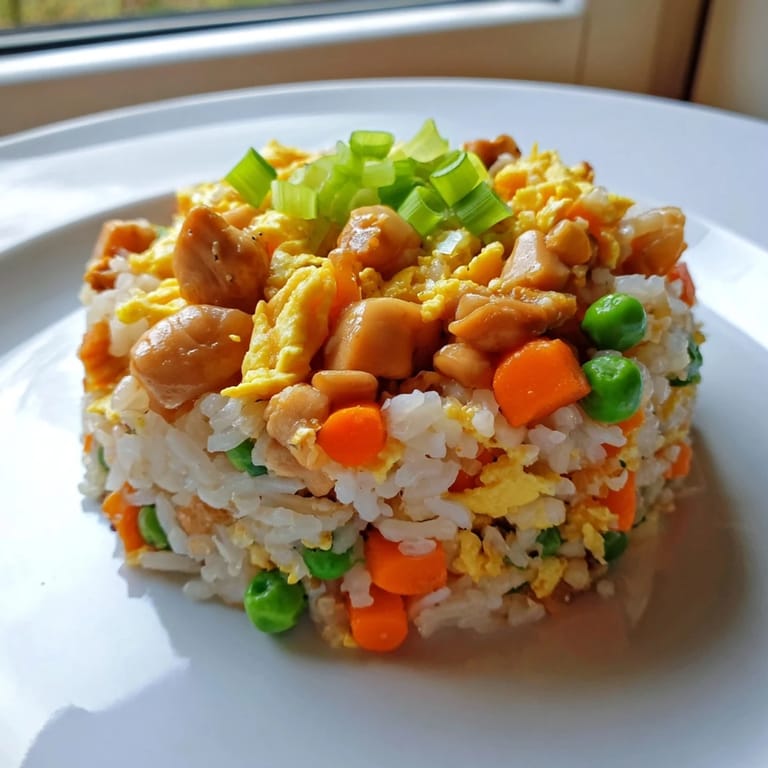
- Eggs: Two large ones create those tender, slightly custardy ribbons that make the whole dish feel more luxurious than it has any right to.
- Carrot: Diced small enough that it softens in minutes but large enough to taste like a deliberate ingredient, not invisible filler.
- Frozen peas: Honestly better than fresh here—they hold their shape and add a pop of color and sweetness without any prep.
- Onion: Keep it fine and small; it should almost disappear into the rice, adding depth rather than announcing itself.
- Spring onions: Save some for garnish at the end—their fresh bite against the warm, savory rice is where the magic lives.
- Day-old rice: This is non-negotiable if you want truly separate grains; fresh rice clumps stubbornly no matter how hard you work.
- Soy sauce: The backbone of the whole thing—use something you'd actually drink, not the bottom-shelf stuff.
- Oyster sauce: Optional but worth it for a subtle umami depth that makes people wonder what your secret ingredient is.
- Sesame oil: A small amount goes far; it should whisper, not shout.
- White pepper: Gentler than black pepper and dissolves into the rice more gracefully.
- Vegetable oil: Split between cooking the chicken and sautéing vegetables so everything gets its moment at temperature.
Tired of Takeout? 🥡
Get 10 meals you can make faster than delivery arrives. Seriously.
One email. No spam. Unsubscribe anytime.
Instructions
- Gather everything like you're about to conduct a small orchestra:
- Prep all your ingredients into bowls and onto your cutting board before the heat even touches the pan. Fried rice moves fast—faster than you think—and there's nothing worse than fishing for an ingredient while your chicken turns from golden to overdone.
- Golden the chicken first:
- Heat one tablespoon of oil in your wok over medium-high heat until it shimmers, then add the diced chicken. You're looking for that deep golden color on the outside, about 4 to 5 minutes, then remove it to a bowl. Don't worry if it's not completely cooked through; it'll finish gently in the rice.
- Soften the vegetables in stages:
- Add the remaining oil, then sauté onion and carrot for 2 to 3 minutes until the onion starts to turn translucent and the carrot softens slightly. Add peas for another minute—they'll warm through but shouldn't lose that slight firmness that makes them feel fresh.
- Scramble the eggs right in the wok:
- Push everything to the side, crack in your eggs, and let them sit for just a moment before scrambling them gently into soft, tender curds. This takes maybe two minutes and creates those lovely ribbons throughout.
- Bring the rice to life:
- Add all your rice now, breaking up any stubborn clumps with the edge of your spatula. Stir continuously for a minute or two until every grain is separate and heated through, listening for that subtle crackling sound that tells you everything is warming evenly.
- Reunite everything and season:
- Return the chicken to the wok, pour in soy sauce, oyster sauce if using, sesame oil, white pepper, and a pinch of salt. Stir everything together for 2 to 3 minutes, tasting as you go—you might need less or more salt depending on your soy sauce.
- Finish with brightness:
- Stir in the sliced spring onions, taste once more, and adjust if something feels off. Serve immediately while the rice is still steaming, with extra spring onions scattered on top.
 Pin It
 There was an evening when I made this for someone who'd had a really difficult week, and something about watching them eat it slowly, deliberately, seemed to matter more than any comfort food should. The simplicity of it felt almost meditative—the way each ingredient held its own flavor but gave itself completely to the whole.
The Secret to Restaurant-Quality Results
The difference between homemade fried rice that tastes just fine and fried rice that tastes like you've unlocked something is heat and movement. A truly hot wok or skillet that your vegetables barely have time to soften in, rice that's dry enough to separate immediately, and a constant, purposeful stirring—this is where the texture comes from. Most home cooks underheat because they're nervous, but that hesitation is what creates the steamed rice texture instead of the slightly crispy, slightly chewy perfection you're after. Trust the heat.
Building Depth Without Overwhelming
The reason this dish feels so complete on a weeknight is that it builds flavor in layers rather than dumping everything in at once. The chicken gets its own moment to brown and develop flavor. The vegetables soften slightly before everything else arrives. The eggs create a subtle richness that lingers. The soy sauce and sesame oil arrive last, coating everything evenly so no single element dominates. It's a lesson in patience within speed—doing things sequentially in a short window, which somehow matters more than the actual amount of time involved.
Making It Your Own Without Losing the Plot
The framework here is strong enough to handle your substitutions and additions without falling apart. Swap the chicken for shrimp if you prefer, or press tofu if you're feeding vegetarians. Add bell peppers, corn, or bean sprouts without guilt—just keep the proportions roughly the same so nothing drowns out the others. The bones of the dish—the technique of building heat, the balance of salty-savory-slightly sweet, the way everything comes together in the final moments—those remain constant.
- Remember that any additions should be prepped as small as your carrots so they soften and incorporate evenly.
- If you're adding something wet like fresh tomatoes or cucumbers, do it at the very end so they don't release moisture that steams the rice.
- Trust your own taste buds to decide if something needs more soy, more sesame, or a tiny pinch more white pepper.
 Pin It
 Fried rice taught me that some of the best meals come from constraints rather than inspiration, from using what you have rather than shopping for what a recipe demands. It's become the dish I make when I want to feel capable in the kitchen without the weight of complexity.
Recipe FAQs
- → Can I use different proteins?
Yes, shrimp, pork, or tofu all work well as alternatives to chicken, offering different textures and flavors.
- → Why use day-old rice?
Day-old rice is drier and less sticky, helping achieve the ideal stir-fried texture without clumps.
- → How to achieve fluffy scrambled eggs?
Cook eggs gently, stirring continuously until just set to keep them light and tender.
- → Can I add extra vegetables?
Absolutely. Bell peppers, corn, or bean sprouts add crunch and color while enhancing nutrition.
- → What oils work best for stir-frying?
Vegetable oil is preferred for its neutral flavor and high smoke point, but other light oils can be used.