 Pin It
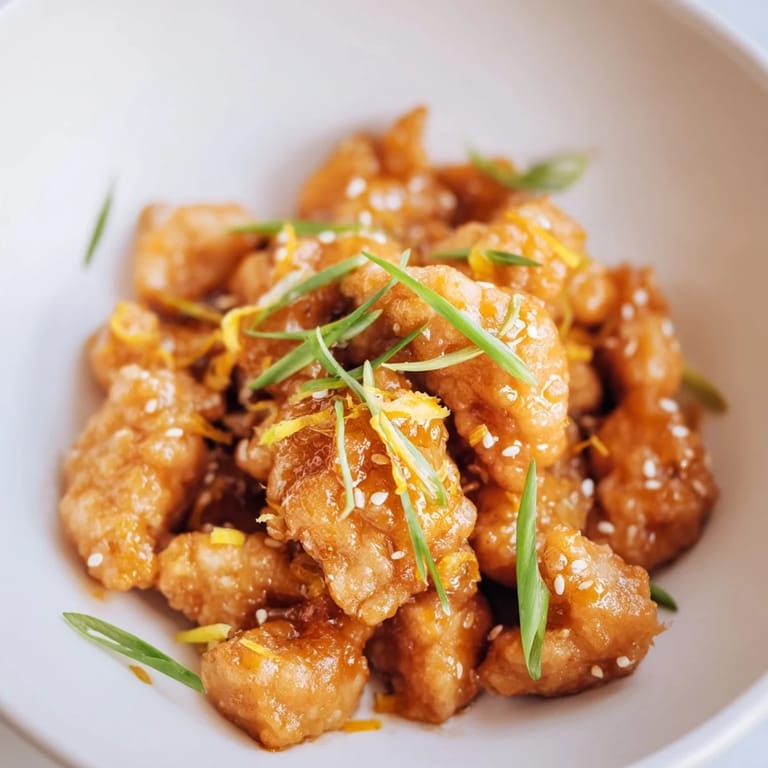
 A friend once brought home orange chicken from a takeout place on a rainy Tuesday, and I spent the whole evening reverse-engineering it in my kitchen, fascinated by how the sauce clung to each crispy bite. That night, I realized the magic wasn't just in the flavor—it was in the textural contrast, the way golden-brown chicken shattered between your teeth before the glossy sauce kicked in. After countless batches and some wonderfully failed experiments, I finally cracked it. Now, whenever I make this dish, I'm that person in the kitchen again, chasing that perfect balance of sweet, tangy, and impossibly crispy.
My sister came home from university once, and instead of ordering in like we usually do, I made this for her and watched her face light up—that moment when she realized I'd actually nailed the crispy coating made my entire week. She polished off her plate in record time and asked for seconds before I'd even cleaned the first wok. It became our thing after that, something I'd make whenever she visited, and now it's the dish everyone requests.
Ingredients
- Boneless, skinless chicken thighs: Thighs stay juicier than breasts when fried and don't dry out, which matters more than you'd think when you're biting through that crispy coating.
- Cornstarch and all-purpose flour: The combination of both creates that shatteringly crisp exterior—cornstarch alone gets too thick, and flour alone doesn't crunch quite right.
- Fresh orange juice and zest: Never use bottled or concentrate here; the fresh juice has brightness that bottled versions simply can't deliver, and the zest adds a subtle bitterness that balances the sweetness.
- Soy sauce and hoisin: Soy brings the savory depth while hoisin adds a subtle sweet funk that rounds out the profile without making it taste like dessert.
- Rice vinegar: This keeps everything tasting fresh instead of flat, cutting through the richness of the fried chicken and sweet sauce with elegance.
- Cornstarch slurry: Mix it with water first, then stir it in—dumping dry cornstarch into hot liquid creates lumps every single time, and I learned that the hard way.
Tired of Takeout? 🥡
Get 10 meals you can make faster than delivery arrives. Seriously.
One email. No spam. Unsubscribe anytime.
Instructions
- Prep your chicken and coating station:
- Cut your thighs into bite-sized pieces—not too small or they'll disappear into the sauce, not too large or the inside stays raw. Set up your egg bowl and flour mixture separately so you can work quickly without dripping egg into the dry ingredients.
- Dredge and coat:
- Each piece gets a quick egg dip, then a thorough roll through the flour mixture, and you'll know you've got enough coating when it looks almost shaggy. Let coated pieces sit for a minute before frying so the coating sets and won't slide off.
- Get your oil ready:
- Heat it to 175°C (350°F)—use a thermometer if you have one, because guessing usually means either pale chicken or burnt coating. The oil should shimmer and move easily when you tilt the skillet, and if a small piece of coating sizzles immediately, you're ready.
- Fry in batches:
- Don't crowd the pan; give each piece room to breathe or they'll steam instead of crisp. Turn them with tongs every minute or so until they're deep golden brown, about 4–5 minutes total, then rest on paper towels to drain the excess oil.
- Build the sauce:
- Combine your orange juice, zest, soy sauce, sugar, rice vinegar, hoisin, minced garlic, ginger, and red pepper flakes in a saucepan and let it simmer while stirring to dissolve the sugar. This moment is when your kitchen smells incredible, and the sauce starts looking glossy and rich.
- Thicken with the slurry:
- Pour your cornstarch mixture in slowly while stirring constantly, and watch it transform from thin liquid to silky glaze in about a minute. Keep stirring so there are no lumps, and once it coats the back of a spoon and looks glossy, you're done.
- Bring it together:
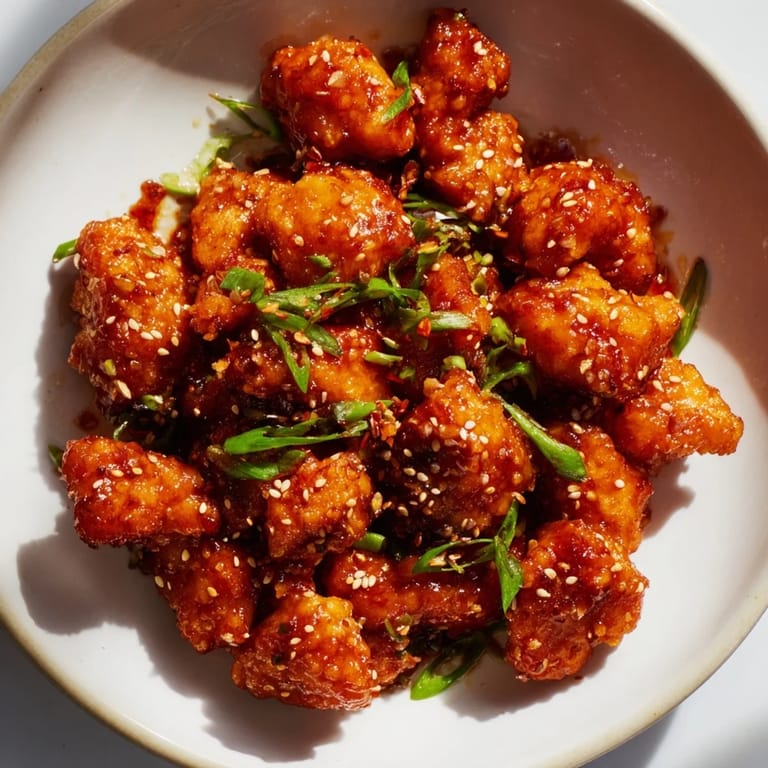
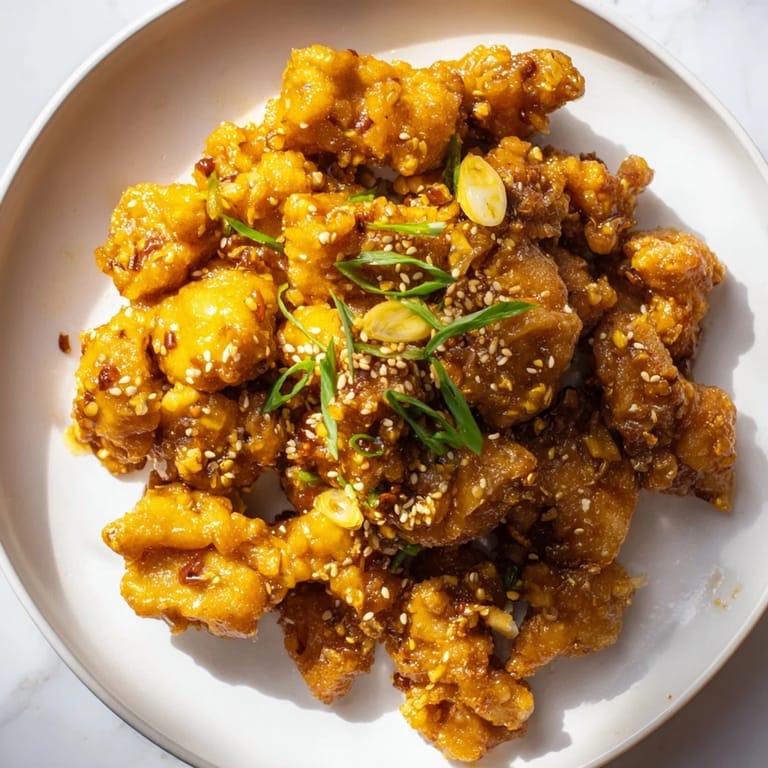
- Toss your golden chicken pieces into the sauce and stir gently for about 2 minutes until everything is coated and heated through. Transfer to a serving platter, scatter spring onions and sesame seeds over the top if you're using them, and bring it to the table immediately.
 Pin It
 There's something quietly wonderful about watching someone taste this and immediately reach for the rice to soak up the leftover sauce, because that moment tells you everything worked. It's comfort food that doesn't feel heavy, familiar takeout that tastes like you actually tried, and that's exactly what keeps me coming back to this recipe.
Why Fresh Orange Juice Changes Everything
I once tried making this with bottled juice to save time, and the sauce tasted flat and one-dimensional—all sweetness with no brightness underneath. Fresh orange juice has this subtle complexity that builds the whole sauce, and the natural oils in the zest add a layer of bitterness that bottled versions can't match. It's the difference between a sauce that tastes good and a sauce that tastes like someone actually cared, and that difference matters more than you'd expect in a simple dish.
Crispiness Is About Temperature and Technique
The secret to that restaurant-style crunch isn't fancy equipment or exotic ingredients—it's maintaining the oil at exactly 175°C (350°F) and not rushing the frying process. When the oil temperature drops because you've added too much cold chicken at once, the coating absorbs oil instead of crisping, and you end up with greasy pieces instead of golden ones. Give yourself permission to fry in smaller batches and bring the oil back to temperature between rounds, because those few extra minutes are the entire difference between good and unforgettable.
Building Depth With Soy and Hoisin
This sauce works because it balances sweetness with savory depth, and that balance comes from combining soy sauce and hoisin rather than relying on sugar alone. Soy brings umami and saltiness that grounds the orange juice's brightness, while hoisin adds a subtle fermented sweetness that reads as sophisticated instead of candy-like. The rice vinegar acts as a bridge between everything, cutting through the richness and making sure no single flavor overwhelms the others.
- Taste as you go—add the red pepper flakes gradually if you like heat, because it builds intensity as the sauce simmers.
- If your sauce tastes too sweet, add another tablespoon of rice vinegar rather than more soy, since soy will make it darker and saltier instead of brighter.
- Leftover sauce keeps for five days in the fridge and works beautifully with roasted vegetables or drizzled over rice bowls.
 Pin It
 Every time I make this, I'm grateful for that rainy Tuesday and the friend who started my obsession with understanding how good food actually gets made. Now it's become the dish I make when I want to impress people without spending all day cooking.
Recipe FAQs
- → What type of chicken works best for this dish?
Boneless, skinless chicken thighs are ideal as they remain juicy and tender while crisping nicely during frying.
- → How can I ensure a crispy coating on the chicken?
Coat the chicken pieces thoroughly with a mixture of cornstarch and flour after dipping them in beaten eggs, then fry in hot oil until golden and crisp.
- → Can the orange sauce be made ahead of time?
Yes, the sauce can be prepared in advance and reheated gently before tossing with the fried chicken to preserve its vibrant flavor.
- → Is it possible to bake the chicken instead of frying?
For a lighter version, bake the coated chicken pieces at 220°C (425°F) for 20–25 minutes until cooked through and crisp.
- → What garnishes complement this dish well?
Sliced spring onions and toasted sesame seeds add texture and a fresh, nutty contrast to the rich sauce and crispy chicken.