 Pin It
 There's something magical about assembling a bowl that feels both indulgent and virtuous at the same time. My friend Sarah invited me over on a Tuesday evening and casually mentioned she'd been craving something Middle Eastern but wanted to keep it light, so I suggested we build a falafel bowl together. As I watched the golden patties emerge from the oven, their edges crispy and fragrant with cumin, I realized this wasn't just lunch anymore—it was a conversation starter, a canvas for whatever fresh ingredients we felt like celebrating that day.
I made this for a small dinner party last summer, and what struck me most was how everyone customized their own bowl—someone added extra lemon, another sprinkled pomegranate seeds on top, and one friend drizzled their sauce extra thick because she couldn't get enough of that garlicky creaminess. Watching people slow down and actually taste each element rather than rush through the meal reminded me why I love cooking these kinds of bowls in the first place.
Ingredients
- Chickpeas: The soul of the falafel—use canned and drained for convenience, though some swear by soaked dried chickpeas for a lighter, fluffier texture.
- Fresh parsley and cilantro: These herbs are what prevent your falafel from tasting dense and heavy, so don't skip them or use dried versions.
- Quinoa: A protein powerhouse that stays fluffy if you let it rest after cooking, absorbing just the right amount of steam.
- Tahini: Buy the creamy, unsweetened kind and shake the jar well before measuring, as the oils separate naturally.
- Lemon juice: Fresh is non-negotiable here—bottled just doesn't have the brightness this dish needs to sing.
- Chickpea flour: This keeps the falafel gluten-free and lighter than all-purpose flour would.
- Garlic: Use fresh cloves you mince yourself for a sharper, cleaner bite compared to pre-minced varieties.
Tired of Takeout? 🥡
Get 10 meals you can make faster than delivery arrives. Seriously.
One email. No spam. Unsubscribe anytime.
Instructions
- Set your oven and prep:
- Preheat to 400°F and line your baking sheet with parchment paper—this prevents sticking and makes cleanup effortless. Think of this as creating a safe landing pad for your falafel.
- Pulse your magic:
- In your food processor, combine all the chickpea mixture ingredients and pulse until it looks like coarse breadcrumbs with some texture still visible. You'll know it's right when you can squeeze it together and it holds, but still feels a bit sandy.
- Shape with damp hands:
- Wet hands are your secret weapon—they prevent sticking and make shaping feel less frustrating. Form 12 balls or slightly flattened patties, whatever shape feels natural to you.
- Brush and bake:
- Give each piece a light coating of olive oil with a pastry brush, then bake for 22 to 25 minutes, flipping halfway through so they brown evenly on both sides. They're done when golden and you can hear a faint crunch when you tap one.
- Cook quinoa gently:
- Rinse your quinoa first under cold water to remove any bitterness, then combine with water and salt in a saucepan. Once it boils, lower the heat, cover, and let it simmer quietly for 15 minutes until the liquid is absorbed.
- Make the tahini sauce:
- Whisk tahini with minced garlic, fresh lemon juice, salt, and water until you reach the consistency of thick Greek yogurt. Taste it—the garlic should whisper, not shout, so adjust gradually.
- Build your bowl:
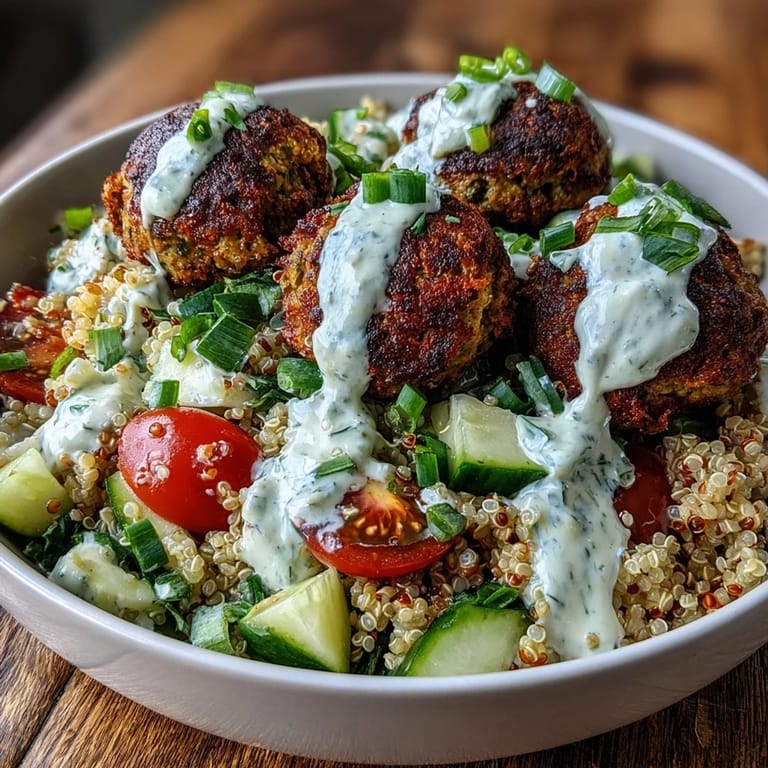
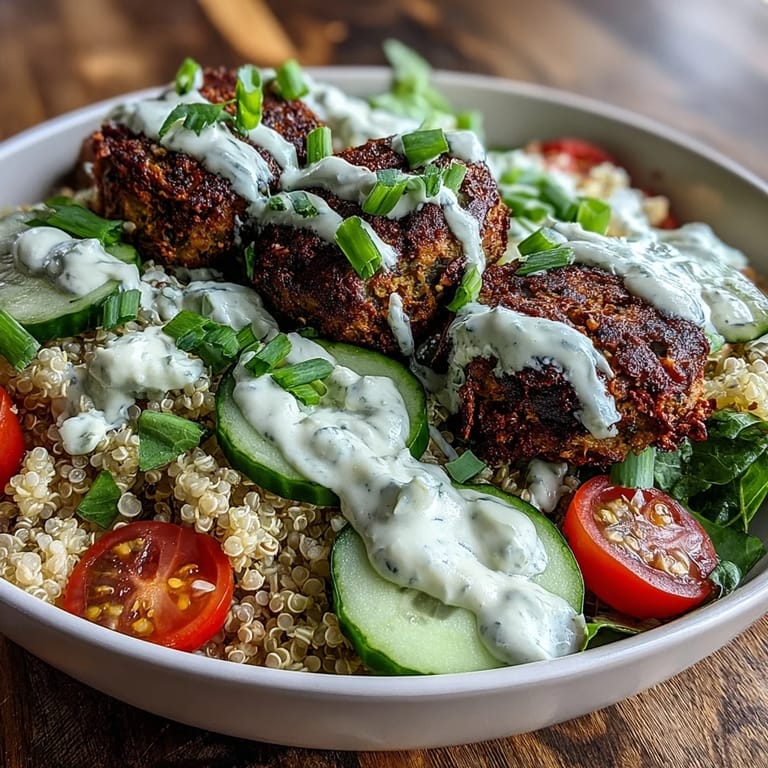
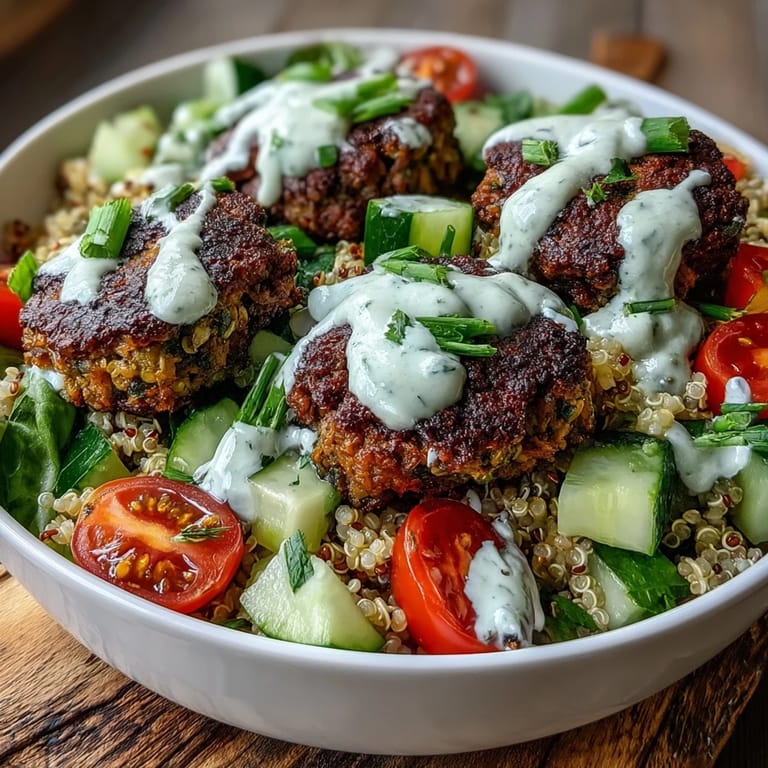
- Start with a generous scoop of fluffy quinoa as your base, then scatter the fresh cucumber, tomatoes, and green onions around it like you're painting. Nestle three warm falafel on top and drizzle the tahini sauce over everything, letting it pool in the corners.
 Pin It
 Last winter, I brought a batch of these bowls to a potluck where I didn't know many people, and somehow over the course of the meal, three separate conversations started about falafel memories—someone's grandmother's recipe, another person's favorite street food from a trip to Lebanon, a third remembering their first time trying anything Middle Eastern. That's when I understood that these bowls carry more than nutrition; they carry permission to share stories and slow down together.
The Art of the Perfect Falafel
The difference between falafel that falls apart and falafel that holds its shape comes down to texture and moisture. Your mixture should never be wet—if it seems sticky, add another tablespoon of chickpea flour and pulse again. I learned this the hard way when I tried to be clever and add extra lemon juice only to watch my falafel dissolve like sad little clouds in the oven. Now I understand that restraint is part of the skill here.
Why Fresh Herbs Matter So Much
Dried herbs will give you bitterness instead of brightness, and that changes the entire character of the dish. When you use fresh parsley and cilantro, they act almost like a palate cleanser in the falafel, preventing that dense, heavy feeling that makes you need a nap afterward. The first time I realized this, I'd accidentally grabbed dried cilantro and the resulting falafel tasted like eating a spice cupboard, so I've never made that mistake twice.
Building Flavor in Every Layer
This bowl works because it respects contrast—the crispness of fresh vegetables against soft, warm falafel, the earthiness of quinoa balanced by bright lemon and garlic, the richness of tahini kept from being cloying by the acid of citrus. Each component stands on its own but becomes something greater when eaten together. Think of it like composing music rather than just throwing ingredients on a plate.
- Toast some pumpkin seeds separately and sprinkle them on top for an unexpected crunch that feels luxurious.
- If you want to make this ahead, keep the components separate and assemble just before serving so nothing gets soggy.
- Leftover falafel reheats beautifully in a 350°F oven for about 8 minutes, emerging just as crispy as when they were fresh.
 Pin It
 This bowl has become my answer to that question we all ask ourselves: What can I make that tastes like I spent hours in the kitchen but actually respects my actual time and energy? It's the kind of dish that invites people to eat slowly and talk longer, which is maybe the best thing any meal can accomplish.
Recipe FAQs
- → Can I make the falafel ahead of time?
Yes, you can prepare and bake the falafel up to 3 days in advance. Store them in an airtight container in the refrigerator and reheat in a 350°F oven for 10 minutes to restore crispiness before assembling your bowls.
- → What can I substitute for chickpea flour?
If you don't have chickpea flour, all-purpose flour works as a binder in the falafel mixture. For gluten-free options, try oat flour or almond flour. Start with 2 tablespoons and adjust if the mixture feels too wet.
- → Is this bowl freezer-friendly?
The baked falafel freezes exceptionally well for up to 3 months. Freeze them in a single layer on a baking sheet first, then transfer to a freezer bag. The quinoa and fresh vegetables are best enjoyed fresh, but you can meal prep them separately for up to 4 days.
- → How do I prevent the falafel from crumbling?
Ensure the chickpeas are thoroughly drained and patted dry before processing. The mixture should hold together when squeezed—if it's too wet, add another tablespoon of flour. Using damp hands when shaping also helps prevent sticking and crumbling.
- → Can I pan-fry the falafel instead of baking?
Absolutely. Heat 1/2 inch of oil in a skillet over medium-high heat and fry the falafel for 2-3 minutes per side until golden brown. Drain on paper towels before serving. This method yields a crunchier exterior but requires more oil.