 Pin It
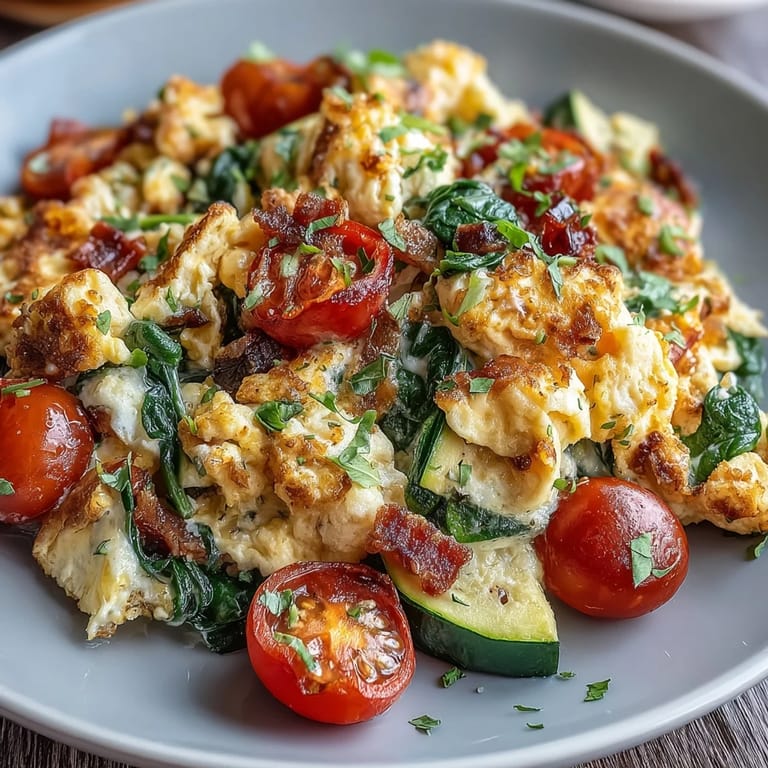
 There's something almost meditative about the quiet morning when the kitchen is still cool and the pan is waiting. I discovered this scramble on a Tuesday when I had a fridge full of vegetables that seemed to be staging a gentle rebellion, and I realized that eggs are basically the most forgiving canvas for whatever you have on hand. The magic isn't in following rules; it's in listening to the sizzle and knowing when to stop.
I made this for my neighbor one Sunday morning after she mentioned feeling uninspired by her usual breakfast routine. She sat at my kitchen counter with terrible posture and perfect timing, arriving just as the eggs were reaching that exact moment between liquid and set. By the time she left, she'd already texted to ask if I'd written down how much zucchini I'd used, and that's when I knew it had landed right.
Ingredients
- Eggs: Use the freshest ones you can find because they scramble more gracefully, and the yolks will be a brighter yellow that makes the whole dish look alive.
- Milk or dairy-free alternative: This small addition makes the eggs puff up slightly and stay tender instead of becoming dense; some people skip it, but I promise it matters.
- Cherry tomatoes: Halving them instead of leaving them whole means they warm through without exploding and turning into tomato jam.
- Baby spinach: It wilts down to almost nothing, so don't be shy; use the full half cup because the greens add earthiness without dominating.
- Red bell pepper and zucchini: Dicing them small means they cook evenly and distribute throughout instead of hiding in corners.
- Red onion: The bite and color are worth the few extra seconds it takes to chop finely; it won't overwhelm if you add it early enough.
- Olive oil or butter: Use whichever you have; butter gives richness, oil keeps things lighter, and the pan will tell you which one it wants.
- Fresh herbs: Parsley, chives, or basil added at the very end keep their brightness and make the whole thing feel intentional rather than accidental.
Tired of Takeout? 🥡
Get 10 meals you can make faster than delivery arrives. Seriously.
One email. No spam. Unsubscribe anytime.
Instructions
- Combine your eggs with intention:
- Whisk the eggs with milk, salt, and pepper until you see small bubbles forming on the surface. This little bit of air is what keeps them from becoming a dense scramble; take your time here.
- Get your pan ready:
- Heat the oil or butter over medium heat until it moves around the pan easily and smells warm but not scorched. This is your signal that the temperature is right.
- Start with the harder vegetables:
- Add the red onion and bell pepper first and let them soften for a couple of minutes. They need a head start because they take longer than everything else.
- Build the layers:
- Stir in the zucchini and cherry tomatoes and cook for another 2 to 3 minutes, stirring occasionally so they warm evenly. The tomatoes will start to look slightly concentrated, which is exactly what you want.
- Wilt the spinach gently:
- Add the spinach and stir it through for about a minute until it's dark green and soft. Don't worry if it looks like there's too much; it collapses dramatically.
- Pour and pause:
- Pour your beaten egg mixture over the vegetables and let it sit untouched for about 30 seconds. This gives the bottom a chance to set so the eggs scramble instead of break apart into tiny pieces.
- Stir with patience:
- Using a spatula, gently push the eggs from the edges toward the center, letting uncooked egg flow to the edges. Stir occasionally rather than constantly; too much fussing toughens the eggs.
- Know when to stop:
- After 2 to 3 minutes, the eggs should look just set but still soft and glossy, with no liquid pooling. If you wait until they look completely dry, you've waited too long.
- Finish and serve immediately:
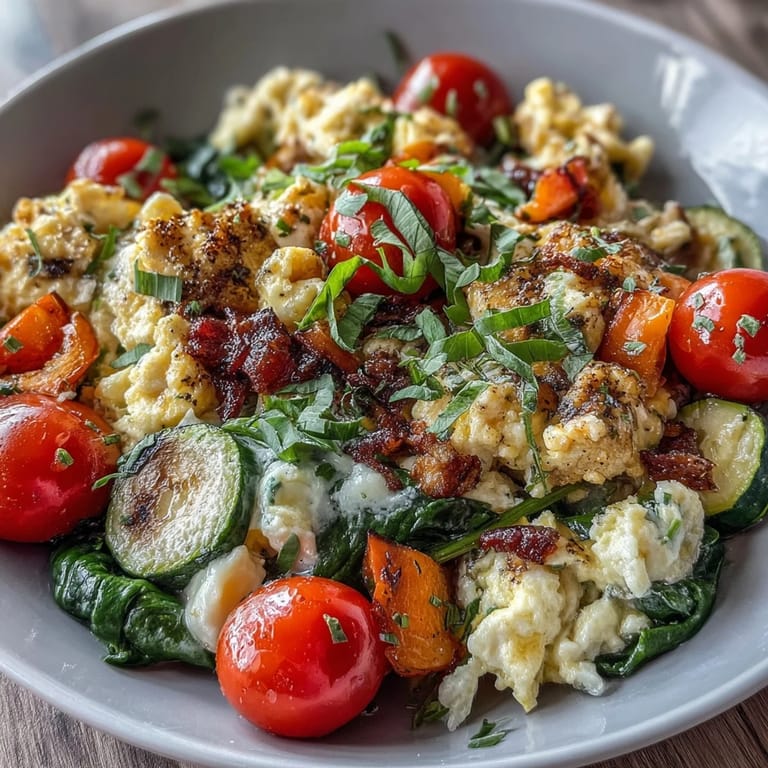
- Remove from heat, scatter the fresh herbs on top, and get it to a plate while everything is still warm. The residual heat will continue cooking slightly, so this timing matters.
 Pin It
 This dish became something more the day my daughter asked if she could help make it, and for the first time in weeks, we stood side by side without her phone nearby. She insisted on chopping the vegetables herself, moving slowly and carefully, and we ended up talking about things that mattered while the zucchini gradually became the right size. That scramble was the best breakfast I've made because the food was almost beside the point.
Vegetable Swaps That Work Beautifully
The joy of this scramble is that it moves with the seasons and your mood. In spring, I use asparagus cut into bite-sized pieces and fresh mushrooms that I sauté until they're golden. Summer brings cherry tomatoes in every color I can find and fresh corn kernels, which add unexpected sweetness. Winter is when I lean on kale or chard and roasted winter squash that I've prepared ahead of time, making the whole process even faster.
The Texture Question
Scrambled eggs divide people, and that's okay. Some want them looser and more custard-like, while others prefer them firmer and more structured. The way I've written this leans toward soft and fluffy, but your preferences matter more than my preferences. You know your own tolerance for doneness, and you should cook it to make yourself happy, not to follow some arbitrary rule about when eggs are ready.
Making It Your Own
The most interesting version of this scramble I've ever seen came from a friend who added a splash of hot sauce to the egg mixture and topped the whole thing with crumbled feta and toasted breadcrumbs. Another friend makes it gluten-free by serving it over toast made from an almond flour loaf, and it tastes completely different and somehow even better.
- Add crumbled feta, goat cheese, or sharp cheddar if you want richness and a slight tang.
- Serve alongside whole grain toast, avocado slices, or a simple green salad depending on what the rest of your day looks like.
- For a dairy-free version, use plant-based milk and skip the cheese entirely, or try nutritional yeast for a savory note instead.
 Pin It
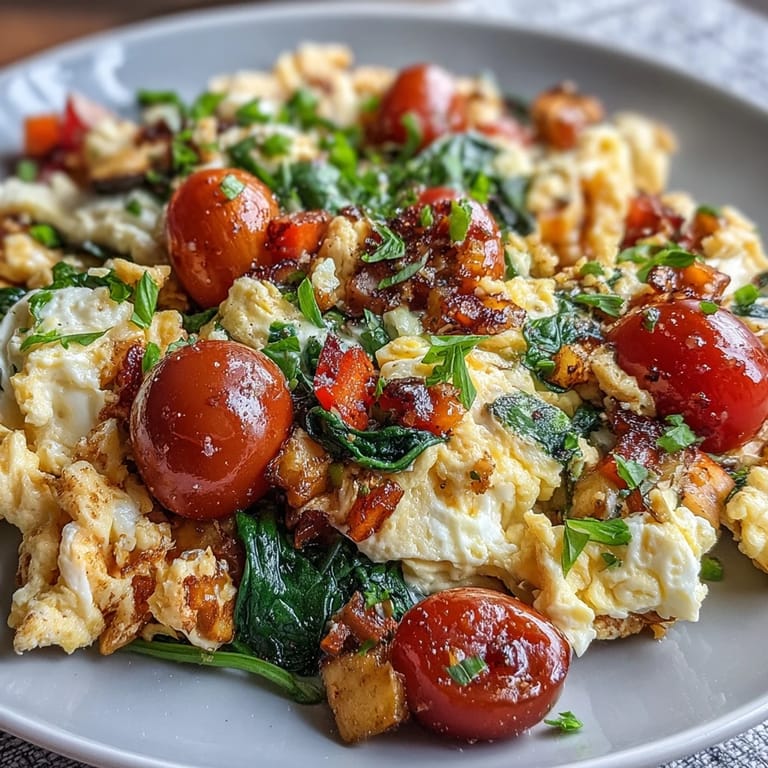
 This scramble is the kind of breakfast that feeds you without asking for much in return, and that's a gift in a busy morning. Make it, enjoy it, and know that you've done something kind for yourself.
Recipe FAQs
- → How do I prevent my eggs from becoming rubbery?
Remove the pan from heat while eggs still look slightly undercooked. The residual heat will finish cooking them, keeping them soft and fluffy. Avoid over-stirring and cook over medium rather than high heat.
- → Can I prepare the vegetables ahead of time?
Yes, chop all vegetables the night before and store them in airtight containers in the refrigerator. This makes morning preparation even faster—just sauté and add the eggs when ready.
- → What other vegetables work well in this dish?
Mushrooms, asparagus, kale, broccoli, diced sweet potato, or corn all pair beautifully with scrambled eggs. Use whatever is fresh and in season for variety throughout the year.
- → How can I make this dairy-free?
Substitute the milk with any plant-based alternative like almond, oat, or coconut milk. Use olive oil instead of butter and skip the cheese. The result remains just as satisfying and flavorful.
- → What should I serve with egg and vegetable scramble?
Whole grain toast, crusty bread, or breakfast potatoes make excellent sides. Add fresh fruit, sliced avocado, or a simple green salad to round out the meal with additional nutrients and fiber.
- → How long will leftovers keep in the refrigerator?
Store cooled leftovers in an airtight container for up to 2 days. Reheat gently in the microwave or in a skillet over low heat, adding a splash of water or milk to restore creaminess.