 Pin It
 There's something almost meditative about making an omelet on a lazy morning when no one else is awake yet. I learned the technique from watching my neighbor flip one with such casual confidence through her kitchen window, and I was struck by how such a simple thing could look so elegant. The first time I tried it myself, I over-thought every movement, but eventually I realized that omelets don't demand perfection—they just need a hot pan, good butter, and a little faith. Now it's become my default when I want something that feels both homey and a bit fancy, ready in the time it takes to brew coffee.
I made this for my sister one Sunday morning when she was stressed about a big work presentation, and watching her face soften at the first bite reminded me that sometimes the best gift is showing up with something warm and comforting. We sat at the kitchen counter eating and talking until the eggs were gone, and she went to that meeting with a little more confidence. That's when I understood that an omelet is never really just an omelet—it's a small gesture wrapped in butter and cheese.
Ingredients
- Eggs: Use large eggs for consistency; room temperature ones cook more evenly and feel silkier on the plate.
- Milk or cream: Just a splash lightens the eggs and adds a subtle richness without overpowering them.
- Butter: Unsalted is crucial so you control the salt level, and it should be foaming but not browning when the eggs hit the pan.
- Cheese: Gruyère melts like silk, Cheddar brings sharpness, and Emmental is creamy and mild—pick what speaks to you or what you have.
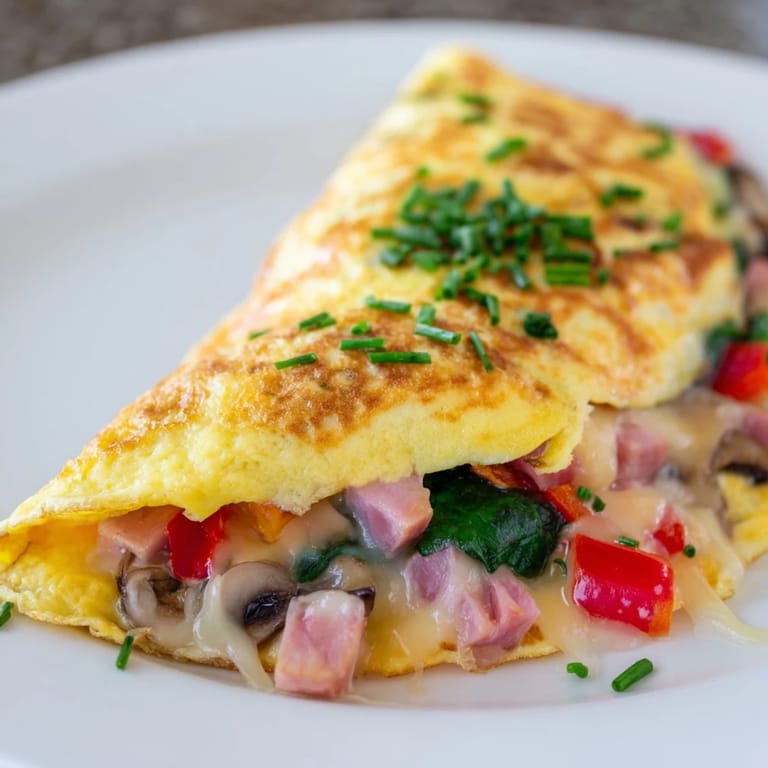
- Ham, peppers, spinach, or mushrooms: These are optional invitations, not requirements; the omelet is complete as-is, but fillings make it a full meal.
- Salt, pepper, and fresh herbs: Taste as you go and finish with whatever herbs you have on hand—chives whisper onion, parsley stays quiet and clean.
Tired of Takeout? 🥡
Get 10 meals you can make faster than delivery arrives. Seriously.
One email. No spam. Unsubscribe anytime.
Instructions
- Whisk your eggs into soft waves:
- Crack all four eggs into a bowl, pour in the milk, and whisk with real intention until the mixture is pale and slightly frothy. This is where air enters, and air becomes fluff.
- Heat the butter until it's ready:
- Watch the pan over medium heat as the butter melts, foams, and turns the color of light honey. This moment of readiness is everything—too cool and the omelet sticks, too hot and it toughens.
- Pour and let it find its shape:
- Tilt the pan as the egg mixture flows in, spreading it into an even layer. Resist the urge to move it; give it a full minute to set at the edges before you touch anything.
- Add cheese and your chosen fillings:
- Scatter the grated cheese across the center in a generous handful, then add ham, peppers, spinach, or mushrooms in whatever combination calls to you. The warmth of the eggs will start melting the cheese immediately.
- Coax the edges and let the center stay creamy:
- Using a spatula, gently lift the edges and let the barely-cooked center flow underneath. Cook for another minute or two until the top is still slightly wet and glossy—this is the exact moment you want.
- Fold and finish:
- Fold the omelet in half over the filling, let it sit for thirty seconds to seal, then slide it onto a waiting plate. Garnish with fresh herbs if you have them, and serve before it cools.
 Pin It
 My partner once told me that the moment he knew we'd work as a couple was when I made him an omelet on the morning after we first met. I hadn't planned anything grand, just found eggs in his fridge and decided to feed him before he drove me home. It's funny how a breakfast food can become part of someone's memory of you.
The Cheese Question
Choosing the right cheese matters more than you'd think, and I've learned this through small experiments. Gruyère is my default because it melts without becoming oily, but I've had love affairs with sharp Cheddar, creamy Emmental, and even crumbled goat cheese for something bright and different. Keep a few options in your fridge and swap them based on mood—sometimes you want rich and nutty, sometimes you want something that cuts through with sharpness, and both are equally valid decisions.
Building Your Omelet Your Way
The beauty of an omelet is that it's a canvas, not a rigid formula. I've found that the best ones come from raiding the fridge and using what's actually there—yesterday's roasted vegetables, bits of leftover bacon, fresh herbs from the garden, even a spoonful of pesto if the mood strikes. The only rule is that you prep everything before the eggs hit the pan, because once you're in the rhythm of cooking, there's no time to chop anything.
Small Details That Matter
Over time, I've noticed that the little things compound into something noticeably better. The temperature of the pan affects how gently the eggs set, the freshness of your eggs changes how they taste, and even the size of your skillet shifts the cooking time. None of these are secrets, just observations made while standing at the stove with a fork and coffee in hand, learning as you go.
- If you want extra fluff, add a splash more milk or beat the eggs like you mean it, and you'll taste the difference immediately.
- Keep the heat medium or medium-low; rushing with high heat makes rubbery eggs and a burnt pan bottom.
- Serve on a warm plate and eat right away—omelets cool fast, and they're best when they're still steaming.
 Pin It
 An omelet teaches you something about cooking that applies to everything else: listen to the food, trust your senses, and know when to stop before it's technically done. Once you understand that, you've learned something bigger than breakfast.
Recipe FAQs
- → How do I achieve a fluffy texture?
Whisk the eggs vigorously with milk or cream before cooking to incorporate air, creating a light, fluffy texture.
- → What cheeses work best for melting inside?
Gruyère, Cheddar, and Emmental melt smoothly and give rich flavor, but feel free to experiment with your favorites.
- → Can I add vegetables?
Yes, diced bell pepper, spinach, and mushrooms are great options to add freshness and enhance taste.
- → How to prevent sticking during cooking?
Use a good-quality nonstick skillet and melt butter over medium heat before adding the egg mixture.
- → What is the ideal cooking time?
Cook the eggs undisturbed for about 1 minute until edges set, then finish with cheese and fillings, folding after another 1-2 minutes.