 Pin It
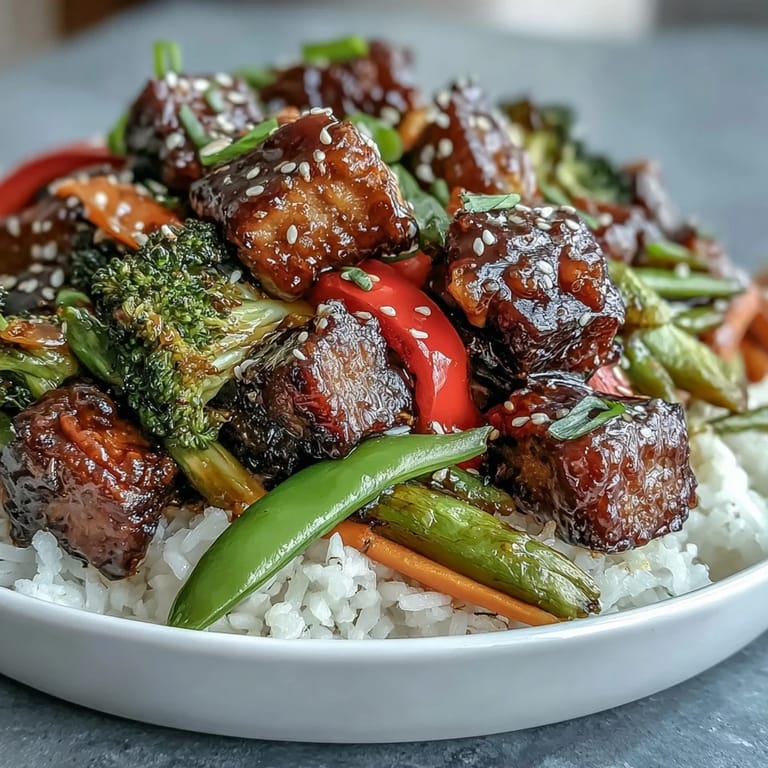
 There's a moment in every busy week when you realize the fridge is calling for help, and that's exactly when this tempeh stir-fry saved me. I was standing in my kitchen on a Thursday evening, hungry but uninspired, when I noticed a block of tempeh sitting in the back and a rainbow of bell peppers begging to be used. Twenty minutes later, the sizzle of golden tempeh cubes hitting a hot wok shifted everything, and suddenly dinner felt like an adventure instead of a chore.
My partner watched me work through this recipe for the first time and kept stealing tastes from the cutting board, which should tell you something about how good it smells while cooking. By the time we sat down to eat, they were already reaching for seconds before finishing their first bowl, and we ended up eating this three times that week because it became the kind of meal that doesn't feel heavy but leaves you genuinely satisfied.
Ingredients
- Tempeh, cut into 1 cm cubes (250 g): This is your protein anchor, and the cube size matters—too thick and it stays chewy inside, too thin and it crumbles; 1 cm is that sweet spot where the outside gets golden and crunchy while staying tender within.
- Red and yellow bell peppers, sliced: These aren't just color; they bring natural sweetness that balances the savory sauce, and slicing them this way means they soften just enough to be pleasant without turning limp.
- Carrot, julienned: The thin cut lets the carrot cook quickly while keeping its slight crunch, and somehow it catches the sauce better than bigger pieces ever could.
- Sugar snap peas and broccoli florets (100 g each): These are your texture keepers—they resist overcooking if you time it right, which is honestly the whole secret to a stir-fry that doesn't turn into mush.
- Spring onions and fresh ginger and garlic: These three are your flavor backbone, added at different times so nothing gets burnt; the ginger especially adds a gentle warmth that ties everything together.
- Soy sauce, rice vinegar, maple syrup, and sesame oil: This sauce is balanced—salty, tangy, slightly sweet, with that toasted sesame note that makes people ask what makes it taste so good without quite being able to name it.
- Vegetable oil (2 tbsp): Using enough oil is what lets the tempeh brown properly; I learned this the hard way with a too-dry pan and tempeh that steamed instead of seared.
Tired of Takeout? 🥡
Get 10 meals you can make faster than delivery arrives. Seriously.
One email. No spam. Unsubscribe anytime.
Instructions
- Mix your sauce first and set it aside:
- Whisking soy sauce, water, rice vinegar, maple syrup, sesame oil, and cornstarch together in a small bowl takes one minute and changes everything because you won't be scrambling mid-cook trying to measure anything.
- Get your tempeh golden on all sides:
- Heat one tablespoon of oil in a large wok or skillet over medium-high heat, then add tempeh cubes and stir occasionally for 4 to 5 minutes until they develop this gorgeous golden crust that tastes almost nutty. This step is worth not rushing—it's where tempeh transforms from okay to genuinely delicious.
- Bloom your aromatics in fresh oil:
- Add the remaining oil to the wok, then let minced garlic and ginger sit for about 30 seconds, just until fragrant—you'll know by the smell alone when it's right. Don't let them brown or they'll taste bitter; you're just waking them up.
- Cook vegetables until they're still snappy:
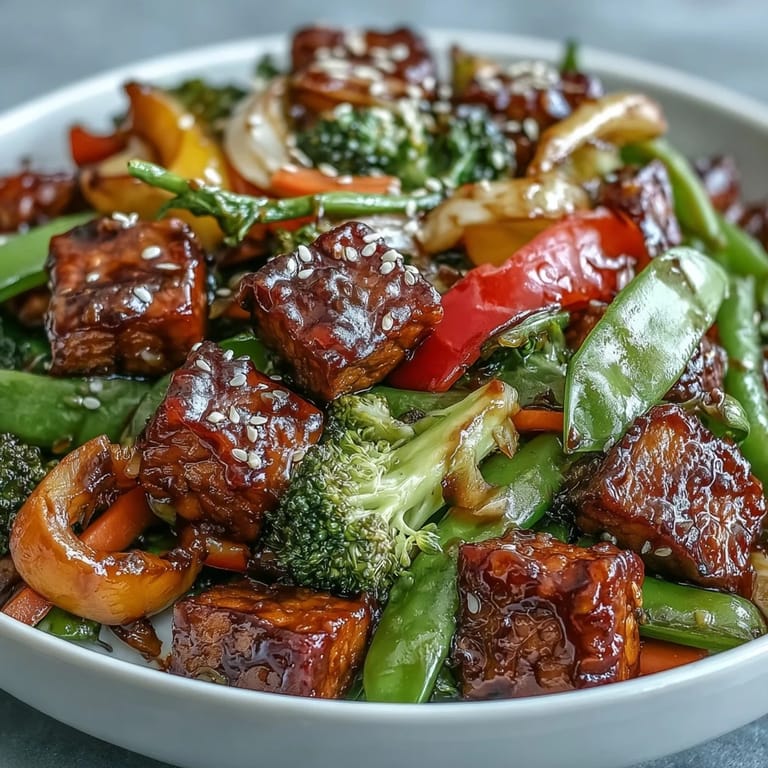
- Add bell peppers, carrot, sugar snap peas, and broccoli, then stir-fry for 4 to 5 minutes—the vegetables should still have resistance when you bite them, not soft all the way through. This is the part where experience helps you know your stove; mine runs hot, so I'm usually closer to 4 minutes.
- Bring everything back together with sauce:
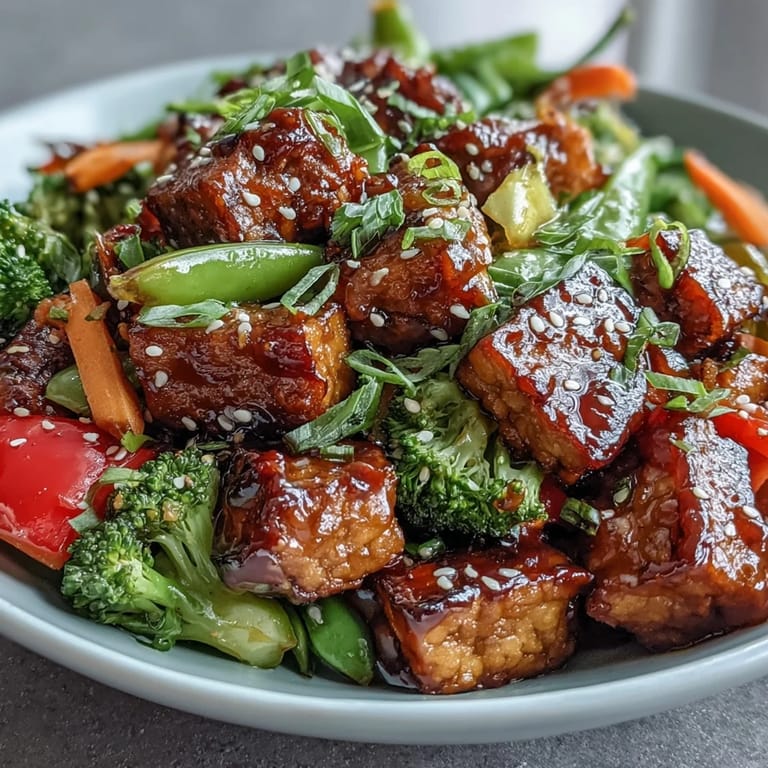
- Return the tempeh to the wok, give your sauce a quick stir to redistribute the cornstarch, then pour it all over the vegetables and tempeh. Toss everything for 1 to 2 minutes, watching as the sauce thickens slightly and coats everything in this glossy, savory finish.
- Finish with spring onions and garnish:
- Remove from heat, stir in spring onions so they stay just barely cooked, then scatter sesame seeds and fresh coriander over top if you have them. Serve while everything is still hot, ideally with jasmine rice or noodles to catch every bit of sauce.
 Pin It
 What surprised me most was how this simple recipe became the thing I'd make when I wanted to prove to myself that eating well on a weeknight wasn't just possible but actually enjoyable. It's since become the meal I suggest to friends who say they don't have time to cook, because watching their faces when they taste this makes clear that sometimes the best dinners are the ones that seem almost too easy to be true.
Why Tempeh Works in Stir-Fries
Tempeh has this firm structure that holds up beautifully in a hot wok, unlike tofu which can crumble if you're not impossibly gentle with it. The fermented soybean base means it absorbs flavors while keeping its own nutty presence, so it's not just a blank protein sponge—it actually contributes something to the dish. Once it hits hot oil, it develops edges that get crispy and golden, which is where a lot of people discover they actually like plant-based proteins because the texture is genuinely satisfying.
Building Layers of Flavor
The magic here is that nothing in this stir-fry is fighting for attention; instead, each ingredient shows up at exactly the right moment and in exactly the right proportion. The ginger and garlic bloom separately from the vegetables so their flavors stay bright instead of becoming flat and burnt-tasting. The soy and sesame oil arrive toward the end, coating everything rather than cooking off, which is why the final bite tastes as good as the first.
Variations and Swaps That Actually Work
The vegetables in this recipe aren't sacred—they're just what works beautifully together, which means you should absolutely swap them based on season or mood. Mushrooms (especially shiitake if you can get them) add an earthy depth, baby corn brings a different kind of texture, and zucchini works if you slice it thicker so it doesn't collapse into the sauce. For extra heat, chili flakes sprinkled in during the sauce step or a splash of sriracha swirled in at the end transforms this into something with more bite, which I do whenever I'm cooking for people who like things spicy.
 Pin It
 This stir-fry has become my answer to the question of what to eat when I want something that tastes like I tried without it feeling like I spent my evening in the kitchen. It's become dinner, not obligation.
Recipe FAQs
- → What makes tempeh different from tofu?
Tempeh is made from fermented whole soybeans, giving it a firm texture and nutty flavor. Unlike tofu, tempeh has a pronounced earthy taste and holds its shape well during cooking, making it ideal for stir-frying.
- → Can I prepare this dish ahead of time?
You can cut all vegetables and prepare the sauce up to a day in advance. Store them in airtight containers in the refrigerator. The dish cooks quickly, so final preparation takes just minutes.
- → What vegetables work best in this stir-fry?
Broccoli, bell peppers, carrots, and sugar snap peas provide excellent crunch and color. You can also add mushrooms, baby corn, zucchini, or bok choy depending on what's in season.
- → How do I store leftovers?
Store cooled leftovers in an airtight container in the refrigerator for up to 3 days. Reheat gently in a skillet or microwave, adding a splash of water if the sauce has thickened too much.
- → Is this dish gluten-free?
The dish can be made gluten-free by substituting regular soy sauce with tamari. All other ingredients, including tempeh and vegetables, are naturally gluten-free.