 Pin It
 I discovered poke bowls on a sunny afternoon when a friend brought me to a hole-in-the-wall spot near the beach, and I watched the server arrange silky marinated salmon over steaming rice like it was the easiest thing in the world. What struck me most wasn't the individual ingredients, but how they sang together—the brightness of soy and sesame cutting through the richness of avocado, the snap of fresh vegetables against tender fish. That first bite changed how I thought about weeknight dinners. Now I make these bowls whenever I want something that feels both nourishing and a little bit special, without spending hours in the kitchen.
I made this for a group of friends on a random weeknight, and someone asked if I'd catered it—and I realized in that moment how much confidence a beautiful bowl of food can give you. The secret is arranging everything with intention, like you're painting something worth looking at. When people slow down to actually appreciate what's in front of them, the whole meal becomes more than fuel.
Ingredients
- Sushi-grade salmon or tuna, 400g diced: This is the centerpiece, so buy from a reputable fishmonger who sells sushi-grade. The quality jump is worth it—you'll taste the difference in sweetness and texture once it's marinated.
- Soy sauce, 2 tbsp: The backbone of the marinade, adding umami depth that makes the fish taste like itself, just more so.
- Sesame oil, 1 tbsp: Use toasted sesame oil for nuttiness; a little goes a long way and it's what makes your kitchen smell like something special.
- Rice vinegar, 1 tbsp (plus 2 tbsp for rice): Bright and gentle, cutting through richness without the harsh bite of regular vinegar.
- Honey or agave, 1 tsp: A touch of sweetness that balances the salty-savory elements and rounds out the marinade beautifully.
- Fresh ginger, 1 tsp grated: Grate it fresh right before mixing—the aromatics fade fast, but those first few minutes are pure magic in the bowl.
- Sesame seeds, 1 tsp (plus 1 tbsp toasted for topping): Toast them yourself if you can; the flavor difference between raw and toasted is the kind of detail that separates good from memorable.
- Sushi rice or short-grain rice, 320g: The canvas everything else sits on—sticky enough to hold together, gentle enough not to compete.
- Water, 480ml: The rice-to-water ratio is everything here; too much and you'll have mush, too little and you'll have crunchy disappointment.
- Ripe avocado, 1: Pick one that yields gently to thumb pressure; slice it just before assembling so it doesn't brown and turn bitter.
- Cucumber, 1 medium thinly sliced: The cooling element that keeps each bite refreshing even when the other flavors are bold.
- Carrots, 2 medium julienned: A whisper of sweetness and a pleasant crunch that makes the bowl feel alive.
- Edamame, 100g shelled and cooked: If using frozen, thaw and warm gently—they add protein and a pop of color.
- Radishes, 4 thinly sliced: Slightly peppery, they keep everything from feeling heavy or one-note.
- Spring onions, 2 thinly sliced: Scattered at the end for a sharp green note that ties the whole bowl together.
- Nori, 1 sheet cut into strips: Ocean-y and umami-rich, these strips add texture and a reminder of the sea.
- Spicy mayo, 4 tbsp (made fresh): Mix mayo with sriracha to taste—the heat should enhance, not overpower, the fish.
Tired of Takeout? 🥡
Get 10 meals you can make faster than delivery arrives. Seriously.
One email. No spam. Unsubscribe anytime.
Instructions
- Rinse and cook the rice:
- Run the rice under cold water in a fine-mesh strainer, swirling gently until the water runs almost clear—this removes starch and keeps the grains separate. In a saucepan, combine rinsed rice and water, bring to a boil, then cover and drop the heat to low, simmering for 15 minutes until the water is absorbed.
- Let it rest and season:
- Turn off the heat and let the covered rice sit for 10 minutes—this gentle steaming finishes cooking and sets the texture. Stir in rice vinegar, sugar, and salt while the rice is still warm; the warmth helps the seasonings meld without making it mushy.
- Prepare the marinade:
- In a small bowl, whisk soy sauce, sesame oil, rice vinegar, honey, and ginger until the honey dissolves. This thin, silky liquid is what transforms the fish from raw to something extraordinary in just minutes.
- Marinate the fish:
- Gently toss your diced fish with the marinade and sesame seeds, then cover and refrigerate for 10 to 15 minutes—any longer and the acid can start to affect the texture. The timing matters because you want the fish infused, not cooked by vinegar.
- Prepare your toppings:
- While the fish marinates, slice avocado, cucumber, and radishes; julienne carrots; and thinly slice spring onions. Arrange them on a platter or in small bowls so assembly moves quickly and nothing sits around browning.
- Build each bowl:
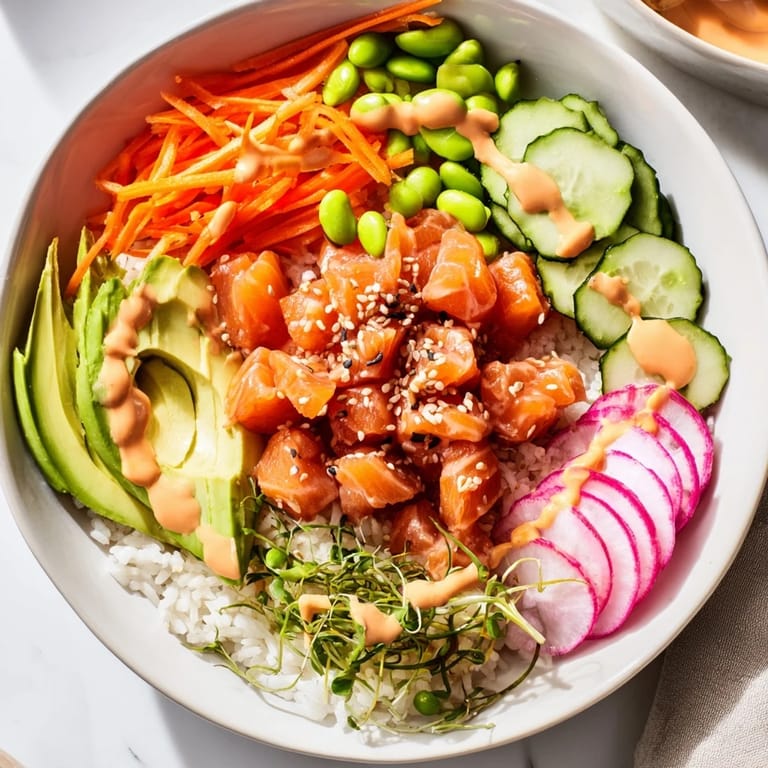
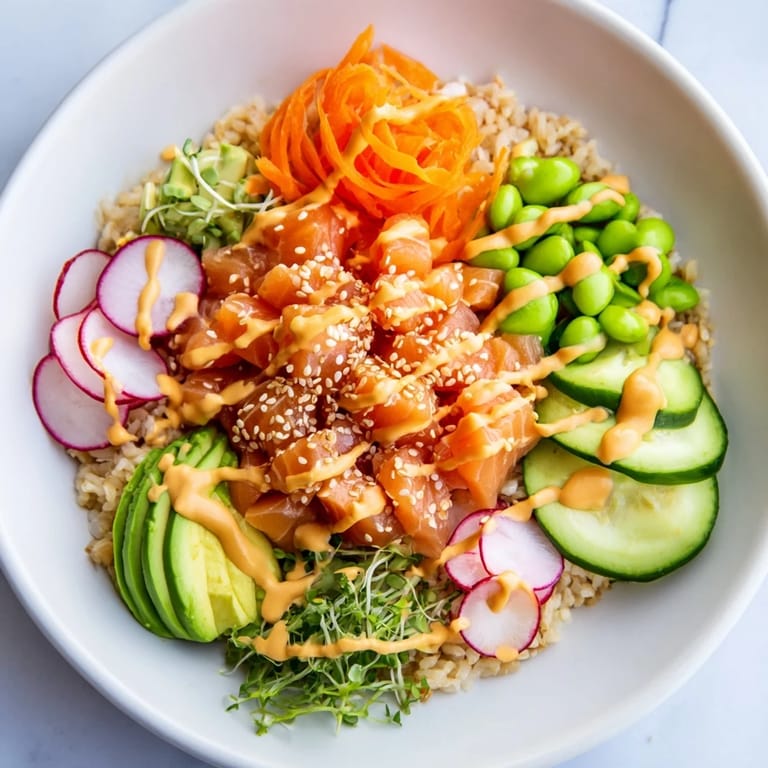
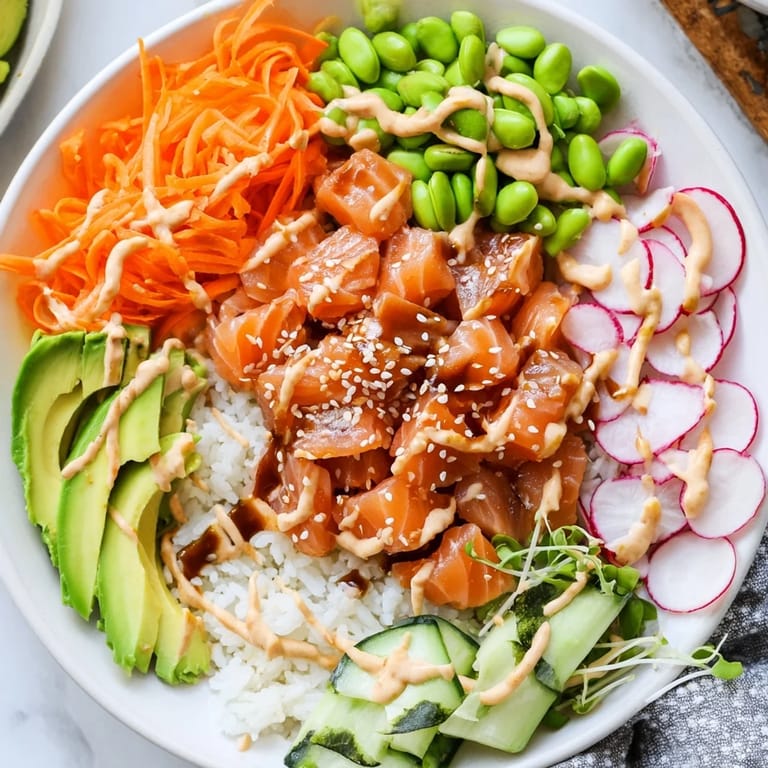
- Divide warm rice among four bowls, then arrange marinated fish in the center, surrounded by avocado, cucumber, carrots, edamame, radishes, and spring onions in neat clusters. This visual organization makes eating more enjoyable and lets every component shine.
- Finish and serve:
- Drizzle spicy mayo and soy sauce over the top, add nori strips and toasted sesame seeds, then finish with microgreens if you have them. Serve immediately with lime wedges and pickled ginger on the side so people can adjust heat and brightness to their liking.
 Pin It
 The first time someone told me they were making poke bowls for themselves on a random Tuesday night, I felt oddly proud—like I'd passed on a small gift. These bowls stopped being about impressing people and started being about taking five minutes to give myself something beautiful. That shift in mindset is what makes them worth returning to again and again.
Building Flavor Layers
Each component of a poke bowl has a job, and respecting that job is what separates a decent bowl from one that makes you close your eyes while eating. The fish provides richness and umami, the vegetables add crunch and brightness, the rice acts as a blank canvas, and the sauces tie everything into a coherent whole. When I first made these, I used to mix everything together like a stir-fry, and I missed half the experience. Now I arrange everything separately so you can taste each element while still enjoying how they complement each other.
Variations and Personal Touches
The beauty of a poke bowl is that it bends to your mood and what's in your kitchen that day. I've made versions with mango in summer when I craved tropical sweetness, and versions with roasted seaweed snacks in winter when I wanted earthiness. A friend of mine adds crispy chickpeas for texture, another drizzles with a sesame ginger dressing instead of mayo. The structure stays the same—rice, protein, vegetables, sauce—but everything inside can change. Once you understand the formula, you're never locked into one way of making it.
Timing and Preparation Strategy
What I've learned is that poke bowls look more impressive than they are to make, mostly because so much can be done ahead of time. You can cook the rice earlier in the day and keep it covered at room temperature, prep all your vegetables the night before, and even marinate the fish up to a couple of hours in advance. On the day you want to eat, you're really just assembling—which is the easiest part. This makes poke bowls perfect for weeknight dinners when you want something special without the stress, or meal prep when you're thinking ahead.
- Prep vegetables the day before and store them in airtight containers to save time during assembly.
- Cook rice earlier in the day and let it cool—warm or room-temperature rice works equally well.
- Marinate fish no more than 2 hours ahead, as extended marinating can change the texture in ways you might not enjoy.
 Pin It
 A poke bowl is proof that simple ingredients, when assembled with care and intention, become something that nourishes both body and spirit. Make this for yourself on a day when you need to remember that you're worth feeding well.
Recipe FAQs
- → What type of fish is best for the marinated bowl?
Sushi-grade salmon or tuna works best, ensuring freshness and a tender texture when marinated.
- → How is the rice prepared for this bowl?
The rice is rinsed until clear, then boiled and steamed before being tossed with rice vinegar, sugar, and salt to add subtle flavor.
- → Can the dish be made vegetarian?
Yes, you can substitute the fish with marinated tofu or tempeh for a plant-based alternative.
- → What sauces complement the bowl?
Spicy mayo made with mayonnaise and sriracha, along with soy sauce drizzled on top, enhances the overall flavor profile.
- → Are there any common allergens to be aware of?
The dish contains fish, soy from soy sauce and edamame, eggs in the spicy mayo, and sesame seeds; check sauces for gluten if needed.