 Pin It
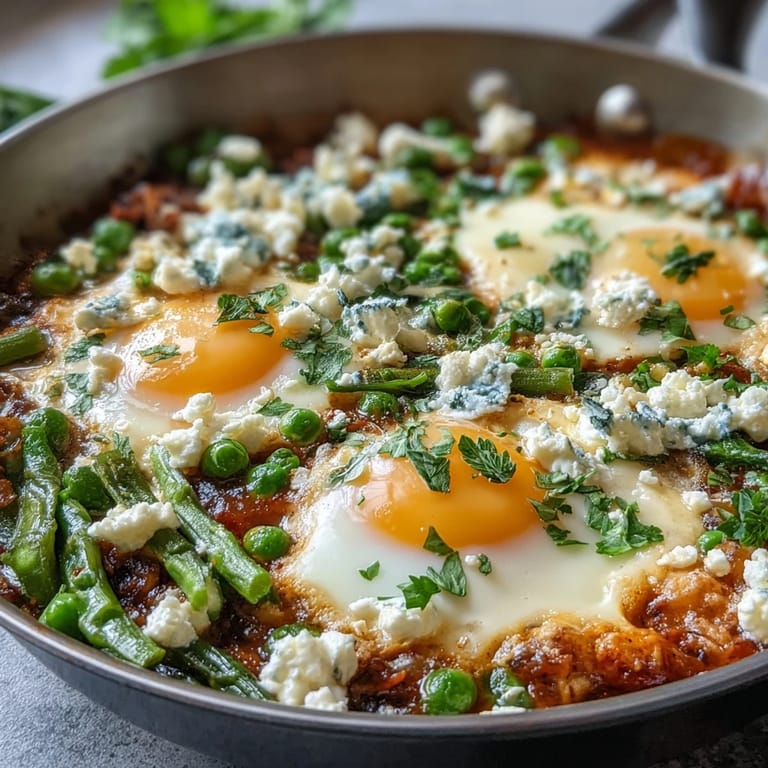
 Last spring, I found myself staring at a farmers market haul of impossibly fresh peas and broad beans, their pods still dewy, and thought: why do we save shakshuka for tomatoes and spices alone? That afternoon, I started layering those tender legumes into a bubbling tomato sauce, cracking eggs into the wells like I was conducting some kind of edible orchestra. The kitchen filled with cumin and paprika smoke, and suddenly I understood why this dish had traveled across continents—it's not just food, it's a moment of pure generosity on a plate.
I made this for my neighbor who'd just moved in during April, and she took one bite and said her grandmother used to cook something almost exactly like it in Lebanon. We ended up talking for two hours over a bottle of wine, and I realized shakshuka isn't really about the recipe—it's permission to linger at the table.
Ingredients
- Fresh or frozen peas: Use frozen if you can't find fresh—they're picked at peak ripeness and honestly more reliable than fresh ones that have been sitting around.
- Broad beans: Fresh ones require double-podding (shelling from the pod, then slipping off the papery skin), but frozen saves you that work and tastes nearly identical.
- Asparagus: Cut into 2-inch pieces so they cook evenly; thicker spears hold up better to the simmering sauce.
- Onion and red bell pepper: The sweetness of the pepper balances the earthiness of the beans beautifully.
- Garlic cloves: Minced small so it distributes through the sauce rather than sitting in chunks.
- Chopped tomatoes: Canned is perfect here—no need to hunt for peak-season tomatoes when you're building flavor with spices anyway.
- Tomato paste: Concentrate the flavor by cooking it in the oil before adding the tomatoes; this step makes a real difference.
- Ground cumin: Toasts for one minute to release its warmth and nuttiness.
- Smoked paprika: Adds a subtle depth that makes people ask what your secret ingredient is.
- Ground coriander: Brightens everything without being obvious about it.
- Chili flakes: Optional, but they add a gentle whisper of heat that wakes up the palate.
- Eggs: Large eggs work best; they cook through while keeping those gloriously runny yolks you're after.
- Crumbled feta cheese: The saltiness cuts through the richness of the egg yolk like a perfect counterpoint.
- Fresh parsley or mint: Mint feels more spring-appropriate here, but parsley is equally welcome.
- Extra virgin olive oil: For drizzling at the end—this isn't the time to skimp.
Tired of Takeout? 🥡
Get 10 meals you can make faster than delivery arrives. Seriously.
One email. No spam. Unsubscribe anytime.
Instructions
- Blanch the beans and peas:
- Boil them for exactly two minutes—you want them just barely tender, still with a little spring to them. The ice bath stops them cold, preserving that bright green color and fresh taste.
- Build your flavor base:
- Sauté the onion and pepper until their edges soften and they start to release their sweetness, about five minutes. This is when your kitchen starts to smell like something good is happening.
- Toast your spices:
- Add the garlic, cumin, paprika, coriander, and chili flakes, and let them cook for one minute until fragrant. This one minute matters more than you'd think—it wakes up the spices instead of letting them sit raw in the sauce.
- Deepen the tomato flavor:
- Stir in tomato paste first, letting it cook and darken slightly before adding the canned tomatoes. Then let everything simmer for ten minutes, stirring occasionally, until the sauce thickens slightly and the flavors start to marry.
- Add the vegetables:
- Gently fold in the asparagus, blanched peas, and broad beans, seasoning with salt and pepper. Let them simmer for five to seven minutes until they're tender but not mushy—you want them to still taste like themselves.
- Crack the eggs:
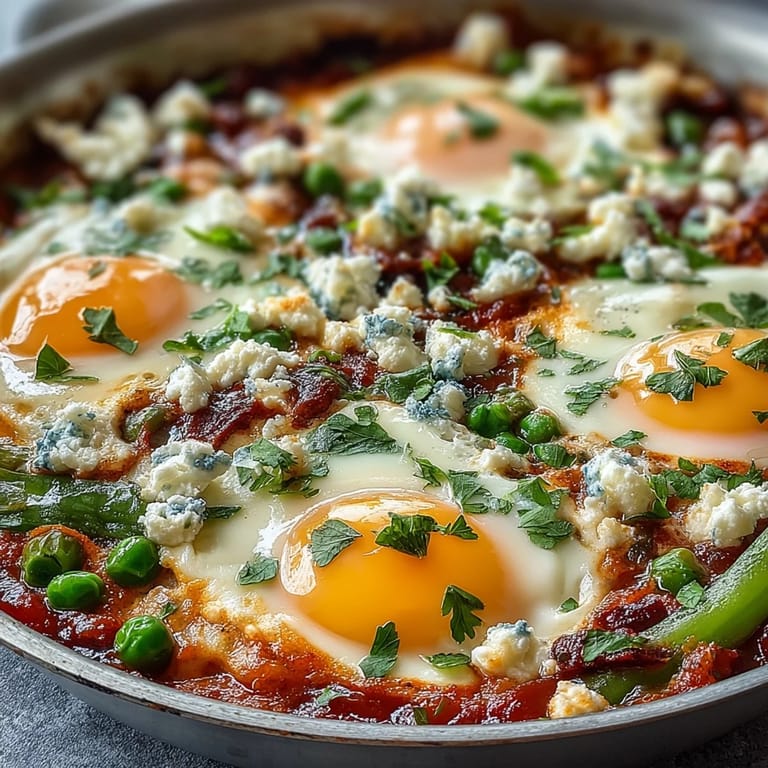
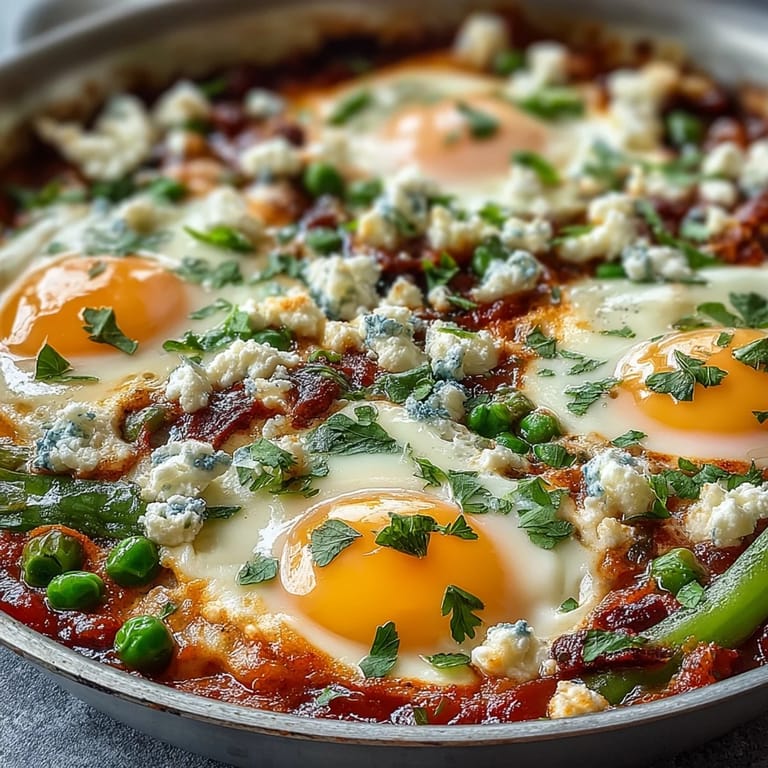
- Make four small wells in the vegetable mixture with the back of a spoon, then crack an egg into each one. Cover the pan and let it cook on low heat for seven to ten minutes until the egg whites turn opaque but the yolks stay runny.
- Finish and serve:
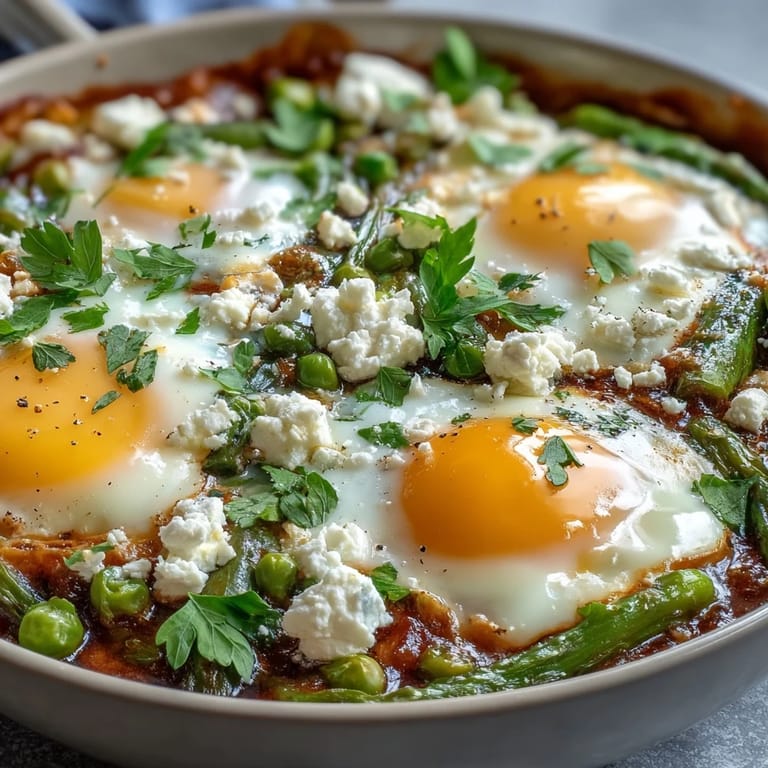
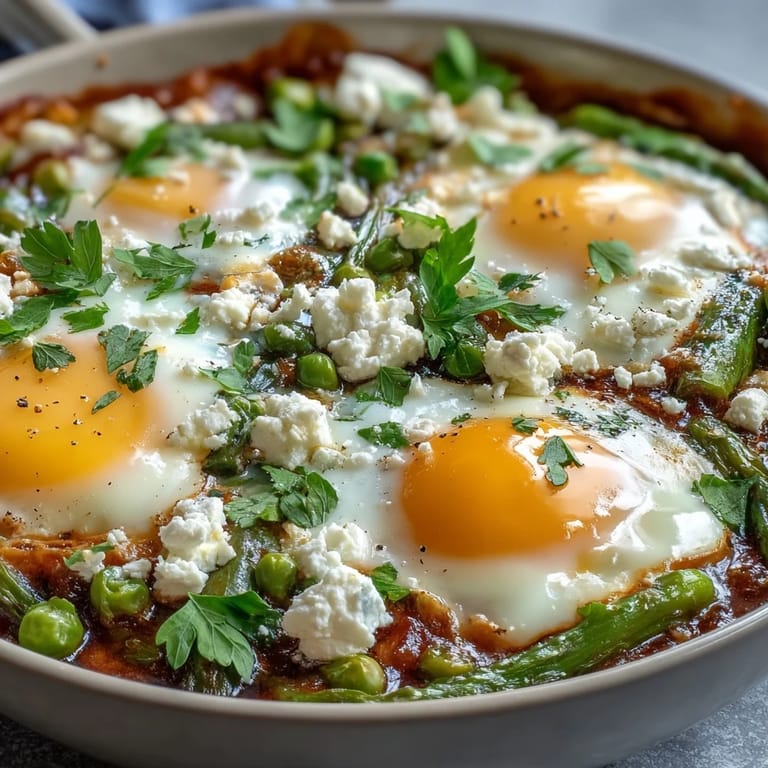
- Remove from heat, scatter feta and fresh herbs over the top, and drizzle generously with olive oil. Serve straight from the pan with crusty bread to soak up every bit of sauce.
 Pin It
  Pin It
 The first time someone dunked a piece of bread into a runny yolk and then into the tomato sauce, they closed their eyes and smiled without saying anything. That's when I knew this wasn't just a recipe—it was a moment of quiet perfection.
The Magic of Spring Vegetables
There's something about cooking with fresh peas and broad beans that feels like you're working with spring itself. They're delicate but also substantial, sweet but not cloying, and they take to warm spices like they've been waiting for the pairing all along. When you blanch them briefly before adding to the sauce, you're preserving that tender quality and that bright, almost grassy flavor that makes people say, 'Wow, do I taste springtime in here?'
Why This Version Beats Traditional Shakshuka
Don't get me wrong—I love a classic shakshuka with just tomatoes and peppers. But adding peas, broad beans, and asparagus gives you layers of flavor and texture that feel less heavy, especially if you're eating this for lunch rather than dinner. The vegetables add natural sweetness that you don't get from tomatoes alone, and they make the dish feel less like comfort food and more like a celebration of what's actually in season.
Variations and Flexibility
This dish is forgiving in ways that make it perfect for experimenting. Some days I add a pinch of harissa to the spice mix, other days I stir in a handful of spinach or kale. You could swap the asparagus for green beans, or add artichoke hearts if you find good ones. If you want to make it vegan, leave out the eggs and feta and stir in some chickpeas—they'll give you that protein and heartiness you'd otherwise get from the yolk.
- A spoonful of harissa swirled in at the end adds smoky heat if you're in the mood for it.
- Mint is preferable to parsley if you want to lean into that spring feeling even harder.
- Serve with flatbread or crusty bread—there's no sauce this good that should go to waste.
 Pin It
  Pin It
 This is the kind of dish that feels both entirely of-the-moment and somehow timeless at once. Make it, eat it from the pan with people you like, and watch how something this simple becomes the thing everyone remembers.
Recipe FAQs
- → Can I use frozen vegetables instead of fresh?
Yes, frozen peas and broad beans work perfectly. No need to thaw first—just blanch them briefly as directed. For asparagus, fresh is preferable for better texture, but frozen can work if added directly to the sauce.
- → How do I know when the eggs are properly cooked?
The whites should be completely set and opaque, while the yolks remain soft and runny. This typically takes 7-10 minutes with the lid on. Check at 7 minutes and continue cooking if needed.
- → What can I substitute for feta cheese?
Goat cheese, ricotta salata, or halloumi work well. For a vegan option, use nutritional yeast or vegan feta. You can also omit cheese entirely and add extra herbs for flavor.
- → Can I prepare the tomato sauce in advance?
Absolutely. Make the sauce through step 4, then cool and refrigerate for up to 3 days. When ready to serve, reheat the sauce, add the vegetables, and continue with the eggs.
- → What bread pairs best with this dish?
Crusty sourdough, pita, or flatbreads are ideal for scooping up the sauce and vegetables. For gluten-free options, use gluten-free pita or serve with rice or quinoa.
- → How can I adjust the spice level?
Increase chili flakes to ½-1 teaspoon for more heat, or add fresh chilies with the garlic. Serve with harissa or hot sauce on the side so everyone can customize their portion.