 Pin It
 There's something about the smell of cumin and cinnamon hitting hot oil that stops me mid-thought every single time. My kitchen was gray and cold one October afternoon, and I'd grabbed a can of chickpeas almost on impulse, thinking I'd roast them with whatever spices were within arm's reach. That small decision turned into this soup, which became the thing I make when I want the kitchen to feel alive again, when I need warmth that isn't just about temperature.
I made this for my sister on a night when she'd had one of those weeks where everything felt too loud and too much. She sat at my kitchen counter while I worked, and by the time the first ladle hit her bowl, her shoulders had already dropped a little. She ate it slowly, deliberately, and asked for the recipe before she'd finished the first spoonful. That's when I knew this wasn't just soup.
Ingredients
- Chickpeas, drained and rinsed (1 can, 400 g): These are your foundation for crunch and protein, but rinsing them properly prevents that tin taste that can sometimes linger.
- Olive oil (2 tbsp total): Split between roasting the chickpeas and starting your vegetable base—it's the glue that carries all those spices to where they need to be.
- Smoked paprika (½ tsp) and ground cumin (¼ tsp for roasting): The roasting spices are what transform ordinary chickpeas into something you'll find yourself snacking on before the soup even happens.
- Carrot, celery, zucchini, and red bell pepper: These four create the backbone of flavor and texture, but honestly you can use whatever vegetables you have that feel like autumn or spring to you.
- Kale or spinach (2 cups, 150 g): The greens wilt down dramatically, so don't be shy with the amount—they'll tuck into the broth like they belong there.
- Diced tomatoes (1 can, 400 g): Canned is perfectly fine here and sometimes even better because it's already broken down, ready to surrender to the broth.
- Vegetable broth (1.2 liters or 5 cups): The quality of this matters more than you'd think, so choose one that tastes like actual vegetables, not just salt water.
- Ground cumin (1½ tsp), coriander (1 tsp), turmeric (½ tsp), cinnamon (½ tsp), and cayenne (¼ tsp optional): This spice blend is why people ask if you've been cooking since dawn—it's warm and complex and somehow makes everything taste deeper.
- Fresh lemon juice (2 tbsp) and cilantro or parsley (2 tbsp chopped): These finishing touches brighten everything at the last second, like opening a window right when the kitchen was getting too heavy.
Tired of Takeout? 🥡
Get 10 meals you can make faster than delivery arrives. Seriously.
One email. No spam. Unsubscribe anytime.
Instructions
- Roast the chickpeas until they're golden and audibly crisp:
- Get your oven to 200°C (400°F) and toss those drained chickpeas with a tablespoon of olive oil, the smoked paprika, cumin, and salt. Spread them on a baking sheet and let them roast for 20 minutes, shaking the pan halfway through—you'll hear them rattling around, and that's exactly what you want.
- Build your flavor base with aromatics:
- While the chickpeas are roasting, warm a tablespoon of olive oil in a large pot over medium heat. Toss in your chopped onion and minced garlic, letting them soften for 2 to 3 minutes until the kitchen starts smelling like something good is happening.
- Layer in your vegetables slowly:
- Add your diced carrot, celery, zucchini, and bell pepper to the pot and cook for about 5 minutes, stirring now and then so nothing sticks or browns too fast—you want them to begin releasing their sweetness, not caramelize.
- Wake up the spices:
- Stir in your cumin, coriander, turmeric, cinnamon, and cayenne (if you're using it) and let them toast in the oil for just 1 minute—this step is small but it changes everything, blooming those flavors so they're not just ingredients anymore.
- Bring the soup together:
- Add your canned tomatoes and vegetable broth, bring it all to a boil, then lower the heat and let it simmer gently for 15 minutes until the vegetables are almost tender and the broth has started to taste like it's been building all afternoon.
- Add the greens and half your roasted chickpeas:
- Stir in your kale or spinach and about half of those crispy chickpeas you roasted, then simmer for another 5 minutes until the greens are completely wilted and the vegetables are soft enough to break with a spoon.
- Finish with brightness:
- Squeeze in your fresh lemon juice and taste for salt and pepper, adjusting until it feels right to you—this is the moment where the soup stops being just warm and starts being alive.
- Serve with style:
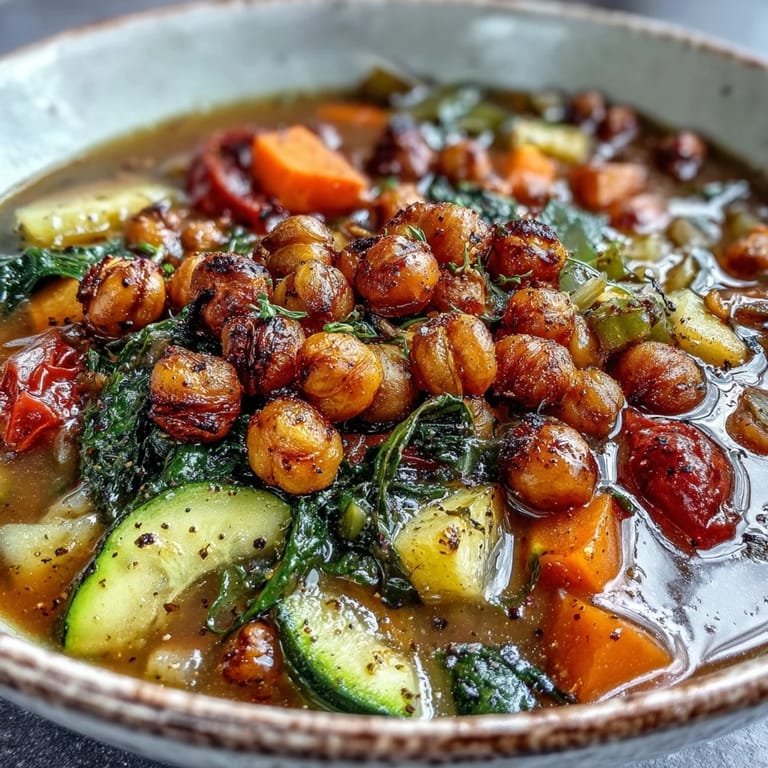
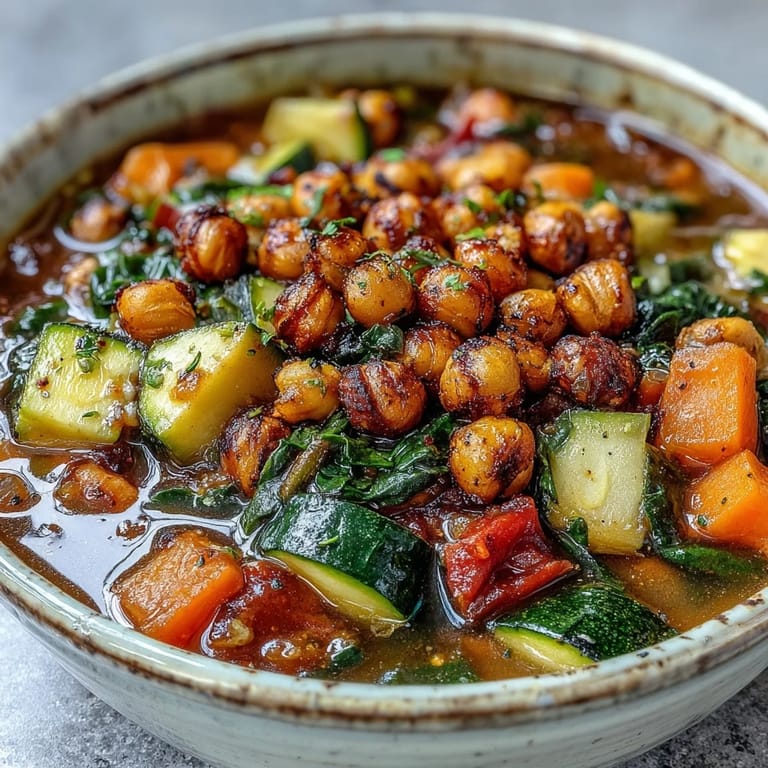
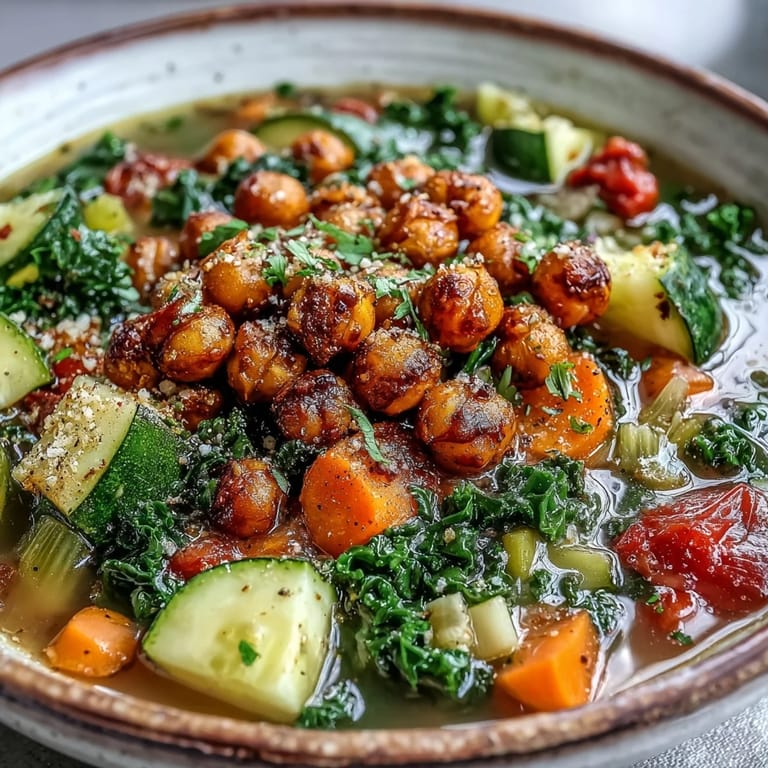
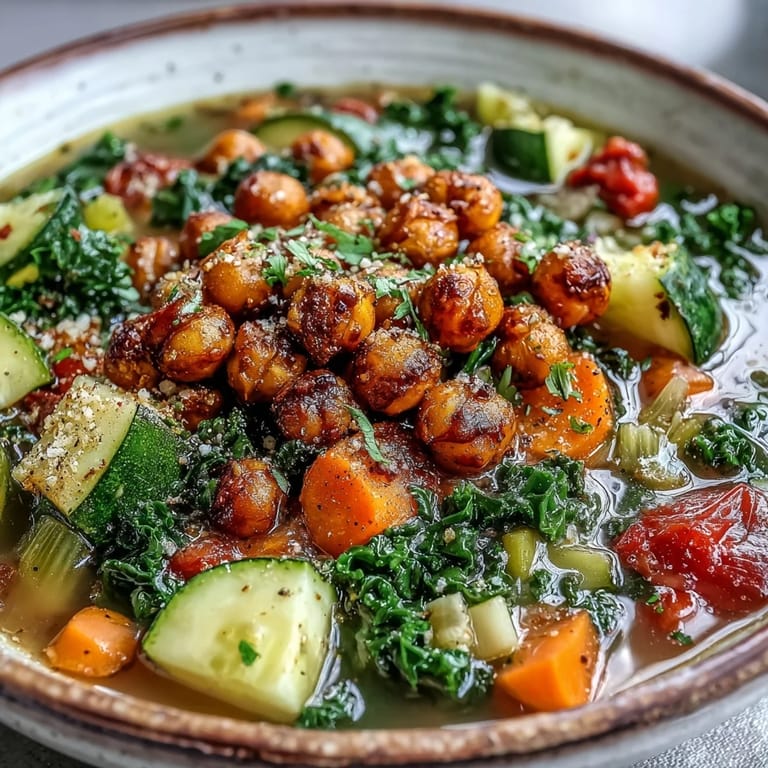
- Ladle the soup into bowls and crown each one with the remaining roasted chickpeas, then scatter your fresh cilantro or parsley over the top like you actually meant for this to look beautiful.
 Pin It
  Pin It
 What strikes me most about this soup is that it asks so little of you but rewards you with something that feels generous. It's the kind of meal that sits down at the table and tells stories, the kind you find yourself making again not because you have to, but because you want to remember that feeling of it coming together in your pot.
Why Roasting the Chickpeas Matters
I used to dump the chickpeas straight into the broth and wondered why the texture felt one-dimensional. Roasting them first creates two textures—some that soften into the soup and some that stay crispy on top—and that contrast is what makes each spoonful interesting. The smoked paprika and cumin get deeper too, almost nutty, when they dry-roast on those chickpeas instead of just floating in liquid.
Adapting This to What You Have
The beauty of this soup is that it's forgiving enough to work with whatever produce your market had that day or whatever's hiding in your vegetable drawer. Zucchini can become summer squash, kale can become chard, and the core of the recipe stays sturdy because it's the spices holding it all together, not any single ingredient. I've made it with butternut squash in fall, with tomatoes and basil in summer, and it's never disappointed me yet.
Making It Your Own
There's room in this recipe for your own kitchen moments and discoveries. Some people swirl in a splash of coconut milk at the end for richness, and the soup becomes something you'd never expect—warm and creamy and still light. Others serve it over rice or with thick bread that can stand up to the broth without falling apart. The cayenne pepper is optional, but if you like heat the way I do, there's permission to add more.
- For a creamier version without coconut milk, blend a handful of the cooked vegetables back into the broth and let it thicken naturally.
- If you're making this for a crowd, you can double it easily and it actually improves if you let it sit overnight and reheat it gently the next day.
- Freeze it in portions if you want, though I've found it tastes best within a week, fresh enough that the cilantro still feels like a choice rather than a requirement.
 Pin It
  Pin It
 This soup has taught me that the smallest gestures sometimes carry the most weight—that cooking something warm for someone when they need it is its own kind of language. I hope you make it and that it finds its moment in your kitchen too.
Recipe FAQs
- → Can I use dried chickpeas instead of canned?
Yes, use 1½ cups cooked chickpeas. Soak dried chickpeas overnight, then simmer for 1-1.5 hours until tender before roasting.
- → What vegetables can I substitute?
Try sweet potato, butternut squash, green beans, or cauliflower. Swap kale for Swiss chard, escarole, or collard greens based on availability.
- → How do I make this soup creamier?
Stir in ½ cup coconut milk or cashew cream at the end. You can also blend a portion of the soup and return it to the pot for added body.
- → Can I make this ahead of time?
Absolutely. Store the soup and roasted chickpeas separately for up to 4 days. Reheat gently and add chickpeas just before serving to maintain their crispness.
- → How can I adjust the spice level?
Increase cayenne pepper to ½ teaspoon for more heat, or add red pepper flakes. For milder flavor, omit cayenne entirely and reduce the black pepper.
- → What should I serve with this soup?
Pair with crusty bread, naan, pita, or serve over cooked quinoa or rice for a heartier meal. A dollop of yogurt or tahini adds richness.